Should I Buy a Mobile Home? What to Know Before You Sign

Buying a mobile home makes sense if you can own the land, stay for years and keep the full monthly cost below local rent. Plan on five years or more, since buying takes cash up front.

Disclosure: This post may contain affiliate links. As an Amazon Associate, we earn from qualifying purchases. This comes at no extra cost to you. Read our full disclosure, or see how we review platforms.
Buying a mobile home makes sense if you can own the land, stay for years and keep the full monthly cost below local rent. Plan on five years or more, since buying takes cash up front.
A mobile home can be the cheapest way to own your own place, or a home that loses value every year. Which one you get depends mostly on the land under it and the loan you use.
On land you own, with a permanent foundation, the home can qualify for a real mortgage and rise in value with the land. In a park, you pay lot rent every month, and the home usually drops in value.
If you’re looking because rent keeps climbing, compare the home’s full monthly cost with that rent, not its sticker price. This guide shows how to add up that full cost, and why renting often wins when buying saves less than $100 a month.
Should I Buy a Mobile Home? Start With These Five Questions
A mobile home isn’t a good or bad buy on its own. It depends on a few facts about your situation.
Before you tour a single home, answer these five questions honestly:
- Will you own the land? Owned land opens up mortgages and gives the home a shot at gaining value.
- How long will you stay? Buying takes cash up front, so short stays rarely pay off.
- Can you get a mortgage, or only a chattel loan? The loan type changes your rate and total cost.
- What’s the full monthly cost? Add lot rent, tax and insurance to the loan payment.
- How does that compare to rent nearby? If renting runs about the same, renting is usually safer.
If you answered “yes, own the land” and “five years or more,” a mobile home can be a great path to home ownership. If not, the details below matter even more for you.
Mobile Home vs. Manufactured Home: What You’re Actually Buying
People use “mobile home” for almost any prefabricated home. But the label on the home affects your loan, your insurance and your resale price.
Technically, a mobile home is a factory-built home made before 1976. That’s the year the U.S. Department of Housing and Urban Development (HUD) started its national construction and safety standard, known as the HUD Code.
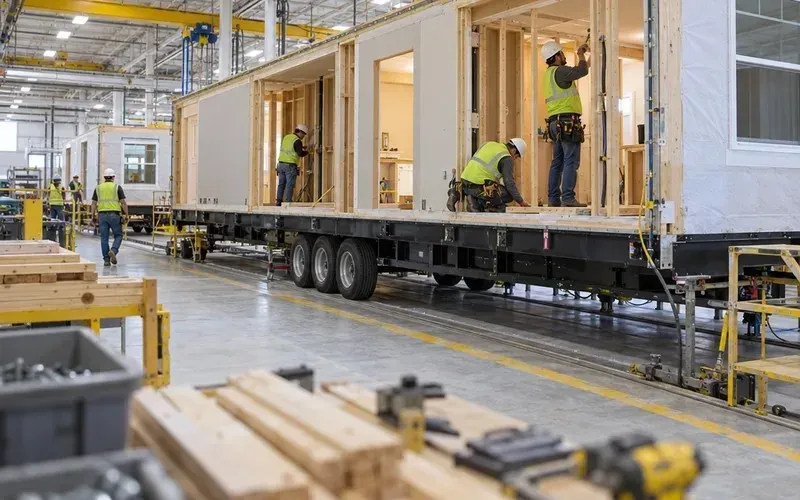
Homes built after that are called manufactured homes. Modular homes are different again, since they follow the same local building codes as site-built houses. Tiny houses are a separate category too, and many are built on trailers and treated more like RVs.
Why does this matter? Many lenders won’t touch a pre-1976 home, and insurers often charge more for one.
When a seller says “mobile home,” check the year it was built and look for the HUD label before you go any further.
The Land Question Decides Almost Everything
If you remember one thing from this guide, make it this: the land under the home matters more than the home itself.
Your land choice decides how the home is classified, which loans you can get and whether it gains or loses value. There are two main paths.
Option 1: Put It on Land You Own
When you own the land and set the home on a permanent foundation, it can be titled as real property. In other words, the law treats it like a regular house.
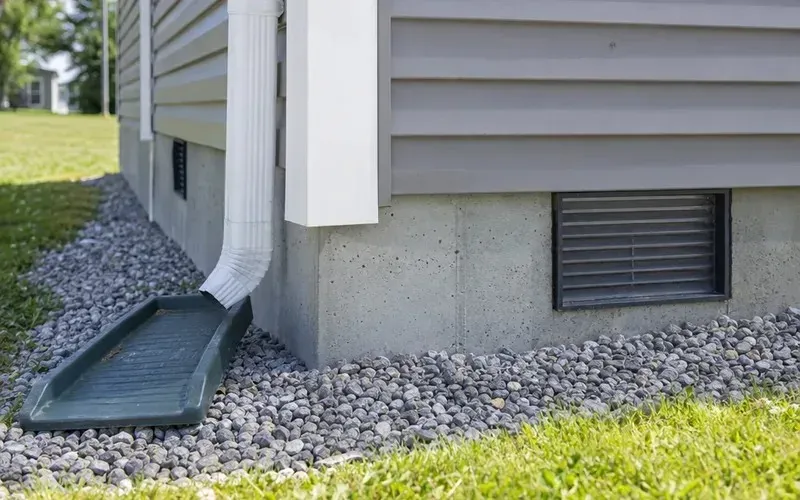
That unlocks real mortgages with lower rates and longer terms. It also means your property can rise in value along with the land.
The trade-off is cost and effort up front. You’ll pay for the land, permits, utility hookups and site work before you move in.
Option 2: Rent a Lot in a Mobile Home Park
In a park, you own the home but lease the ground under it from a landlord. That makes the home personal property, the same legal category as a car.
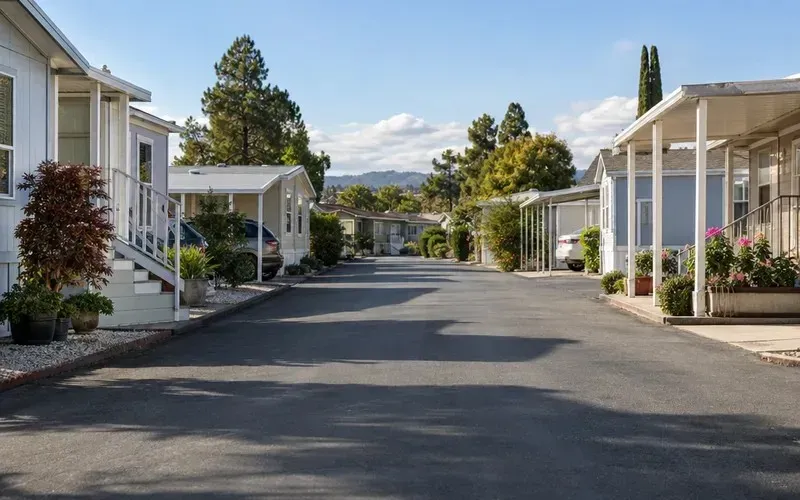
This path is cheaper to start and often includes shared services like water or trash pickup. But you’ll pay lot rent every month, and the lease terms decide how much it can rise.
If the landlord sells the land, you may have to move the home or leave it. Read the lease for notice rules and rent increase limits before you buy.
Here is how the two paths compare side by side:
| What changes | Land you own | Lot in a park |
|---|---|---|
| How it's titled | Real property, like a house | Personal property, like a car |
| Loans you can get | Mortgages, including FHA | Chattel or personal loans |
| Monthly costs | Loan, tax and insurance | Loan, lot rent and insurance |
| Cost to start | Higher (land, permits, site work) | Lower |
| Value over time | Can rise with the land | Usually drops |
What a Mobile Home Really Costs (Beyond the Sticker Price)
The sticker price is the number everyone looks at. But it’s rarely the number you end up paying.
Here are the costs buyers most often miss:
- Transport and setup: Moving the home to your site, then leveling and anchoring it.
- Foundation and site work: Piers, a slab or a crawl space, plus grading and drainage.
- Utility hookups: Water, sewer or septic, power and sometimes a well.
- Lot rent: A monthly park charge that can rise each year.
- Tax and insurance: Property tax on land you own, or personal property tax in some areas, plus a homeowners policy.
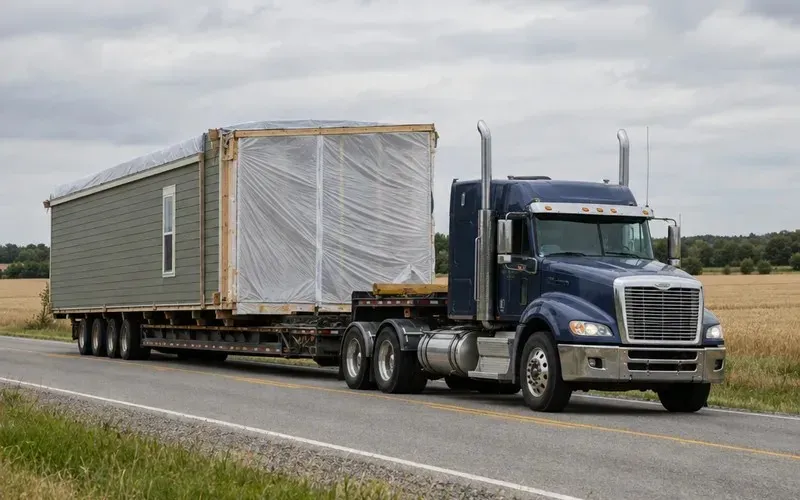
Many of these come out of pocket, since loans often don’t cover site prep. Build your budget around the total move-in cost, not the list price. Furniture adds to that bill too, though there are ways to furnish a home for almost nothing.
Ask the dealer for a written, line-by-line quote that includes delivery, setup, skirting and steps. Then ask what’s NOT included.
How Financing Works for a Mobile Home
Finding a way to finance a mobile home is harder than for a regular house. Not impossible, just different.
The land question matters here too. A home on owned land gets very different treatment than a home in a park.
Mortgages for Homes on Land You Own
When the home counts as real property, you can apply for a regular mortgage. That usually means a lower rate and up to 30 years to pay.
Some programs go further for well-built homes. For example, homes that meet Freddie Mac’s CHOICEHome standard are appraised like site-built homes and can qualify for a down payment as low as 3%.
The best part? Freddie Mac also waives its manufactured home credit fee on CHOICEHome mortgages, which trims one cost from your loan pricing.
Fannie Mae runs a similar program called MH Advantage, and government-backed loans are another option. Loans insured by the Federal Housing Administration (FHA) can finance a manufactured home, the land or both.
Chattel and Personal Loans for Homes in a Park
If the home sits on rented land, most buyers use a chattel loan. Also called a chattel mortgage, it’s secured by the home alone, much like a car loan.
Chattel loans are easier to get, but they tend to carry higher rates, shorter terms and fewer consumer protections. That’s why you should read every page before you sign.
Personal loans from a bank or credit union can work too. But their limits are often too low to cover the whole home, so expect to pay part out of pocket.
What Credit Score Do You Need?
Your credit history affects whether you qualify and what rate you get. Lenders look at your score, income and debts to judge your creditworthiness.
Under FHA rules, you can qualify with a score as low as 580 and 3.5% down. Conventional loans and chattel lenders usually want higher scores, and each lender sets its own cutoffs.
Check your credit reports a few months before you shop. Paying down balances and fixing errors can save you real money over the life of the loan.
What Will Your Monthly Payment Look Like?
Here is what a hypothetical $100,000 loan costs each month in principal and interest. These rates are examples, not quotes.
| Loan type | Rate and term | Monthly payment |
|---|---|---|
| Mortgage | 7% for 30 years | About $665 |
| Chattel loan | 9% for 20 years | About $900 |
| Chattel loan | 10% for 20 years | About $965 |
Now add the extras. In a park, lot rent stacks on top of that loan payment, and so do insurance and any taxes.
Say lot rent is $600 in your area. Your chattel loan plus rent could top $1,500 a month before insurance, which may cost more than a nearby apartment.
Put simply, compare the full monthly total, not just the loan payment.
Do Mobile Homes Lose Value?
Often, yes. But it depends almost entirely on the land.
A home in a park tends to lose value over time, much like a car. You don’t own the ground, and the structure wears out with age and weather.
A home on land you own is a different story. The land usually rises with the local housing market, and a solid foundation helps the home hold its worth.
What this means for you: if building wealth is your goal, own the land. If you can’t, treat the home as a place to live, not an investment.
The Real Pros of Buying a Mobile Home
For many buyers, mobile homes are a key source of affordable housing in the United States. In fact, Freddie Mac says more than 22 million families own homes because of manufactured housing.
Here’s what you get:
- Lower cost: The home usually costs far less than a site-built house of the same size.
- Fast building: Factory construction isn’t delayed by rain, snow or crew shortages.
- Modern features: Many new models offer open floor plans, upgraded kitchens and porches.
- Easy upkeep: Smaller homes and yards mean less work and lower repair bills.
Newer homes can also be more energy-efficient than you’d expect. For example, a CHOICEHome must meet insulation values of R-33 ceiling, R-11 wall and R-22 floor, plus energy features above current HUD rules.
An energy-efficient home means lower heating and cooling bills, which helps the monthly math above.
If you own the land, renting out a spare room can also help you pay off the loan faster.
The Downsides Most Buyers Underestimate
Now for the other side. Most “I regret buying a mobile home” stories trace back to the same few problems:
- Rising lot rent: Your housing cost can climb even after the home is paid off.
- Losing the land: A park sale can force you to move a home that’s costly to relocate.
- Shrinking value: On rented land, you may sell for less than you paid.
- Tougher financing: Higher rates mean more interest over the life of the loan.
- Slow resale: Fewer buyers can get loans, so homes can sit on the market.
There’s also the stigma some people attach to mobile homes. That’s fading as newer homes look more like regular houses, but it can still affect resale in some areas.
The fix for most of these? Know them before you buy, and choose the land and the loan carefully.
Buying a Mobile Home vs. Renting an Apartment
For many readers, this is the real decision. And it comes down to your full monthly cost and how long you’ll stay.
Buying makes sense when your loan, lot rent, tax and insurance together cost less than local rent. It also helps to stay long enough to cover your moving and closing costs.
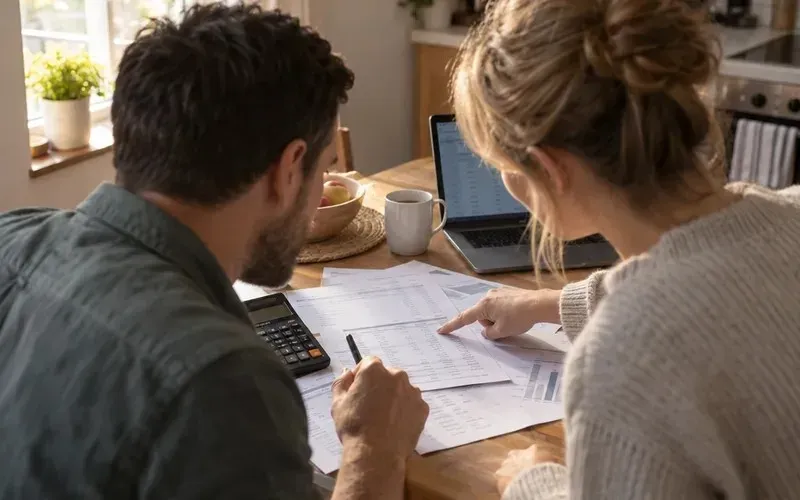
Renting wins when the monthly totals are close. A renter can leave at the end of a lease, while a mobile home owner may struggle to sell.
Run both numbers side by side. If buying saves less than $100 a month, the flexibility of renting is often worth more.
And if you stay a renter, there are still ways to cut what you pay.
Should You Buy an Older Mobile Home?
A used home can be a bargain. But age brings risks you need to check.
First, skip any pre-1976 home unless you’re paying cash and know what you’re getting. Those homes predate the HUD Code, and most lenders and many insurers won’t cover them.
Next, look for the HUD label on the outside and the data plate inside. Then hire an inspector to check the roof, plumbing, electrical, heating, frame and underbelly, since poor installation and water damage cause many of the costliest repairs.
How to Buy a Mobile Home the Smart Way
Ready to move forward? Follow these steps in order to avoid the most expensive mistakes:
- Decide where it will sit. Land you own or a park lot shapes your loan, costs and future value.
- Check zoning and park rules. Ask your planning office about permit and license rules, and get park rules and rent history in writing.
- Get preapproved. A lender who knows manufactured homes can tell you how to finance it before you shop.
- Compare homes and dealers. Get three quotes, and ask whether a new home carries a CHOICEHome certification label from the factory.
- Inspect and plan the setup. Make your offer depend on an inspection, then book licensed transport and setup.
- Close carefully. Review the title, lease and loan papers, then keep up with maintenance to protect your ownership stake.
Follow that order, and you’ll catch most deal-breakers before any money changes hands.
Frequently Asked Questions
What are the disadvantages of a mobile home?
The big ones are rising lot rent, falling value on rented land and pricier loans. Resale can also be slow, and moving the home later is expensive.
What is the lowest credit score to buy a mobile home?
Under FHA rules, you can qualify with a score as low as 580 and 3.5% down, or 500 to 579 with 10% down. Other lenders usually want higher scores.
Who has the best quality manufactured homes?
No single builder wins for everyone. Compare insulation, roof pitch and warranty, and favor homes certified for programs like Freddie Mac’s CHOICEHome, which set stricter build specs.
What is the best state to live in a mobile home?
Look for a state where land is affordable, zoning allows manufactured homes and parks have strong tenant protections. Check lot rents, property tax rules and severe weather risk too.
Why does Dave Ramsey say not to buy a mobile home?
The core argument is depreciation: a mobile home on rented land tends to lose value like a car. That advice fits park homes best and homes on land you own least.
Should I buy a 20 year old mobile home?
It can work if the price is low, the HUD label is present and an inspection comes back clean. Budget for repairs, and expect fewer loan options than for a newer home.
Is owning a mobile home worth it?
It’s worth it when your full monthly cost beats local rent and you control the land under the home. If the totals match a nearby apartment, renting is usually the better deal.
How much are payments on a $100,000 mobile home?
At a hypothetical 7% over 30 years, expect about $665 a month in principal and interest. At 9% over 20 years, it’s about $900, before lot rent, taxes and insurance.
The Bottom Line
Should you buy a mobile home? Yes, if you can own the land, stay put for years and beat local rent on the full monthly cost.
If not, renting may protect your money better while you save up for land. And if neither path fits, these cheap housing alternatives are worth a look.
Which path fits your plans better: land you own or a spot in a park?

Jason is a personal finance expert and the founder of Frugal For Less. He has spent over a decade researching and testing hundreds of money making apps, survey sites, and savings strategies to help readers earn more and keep more of their hard-earned cash.
More about the author