17 Things You Can Upcycle at Home, From Jars to Old Dressers

Many of the things you can upcycle are already sitting in your recycling bin, your closet or your garage.

Disclosure: This post may contain affiliate links. As an Amazon Associate, we earn from qualifying purchases. This comes at no extra cost to you. Read our full disclosure, or see how we review platforms.
Many of the things you can upcycle are already sitting in your recycling bin, your closet or your garage.
Spray paint can be dry to the touch in 12 minutes.
That’s the dry time Rust-Oleum lists for its Industrial Choice 1600 System enamel spray. Its site lists that paint in 40 colors (as of October 2026).
Below are 17 things you can upcycle at home, ranked from same-day jobs to weekend builds. Each one comes with its cost and time, plus a reason you might skip it.
Not sure where to start?
- Got a recycling bin and one free evening? #1 and #4 are done before dinner.
- Kids at home on a rainy day can handle #2 and #3 with a little help.
- A closet full of clothes you never wear is covered in #5 and #9.
- A tired chest of drawers in the garage is a weekend job, and that’s #17.
How This List Is Ranked
The 17 things on this list are ranked by time, meaning how long a beginner needs to turn the raw item into a finished piece. A jar you only wash beats a dresser that needs 2 coats of paint.
Same-day projects come first, then projects that need a few days for glue, paint or sewing. When two items tie, the one more people already have at home goes first.
17 Things You Can Upcycle, Fastest First
The things you can upcycle at home include glass jars, cardboard boxes, plastic bottles, tin cans, old clothes, wine corks, crates, pallets and worn furniture.
The first 8 take a single day. The last 9 need a few days, mostly for paint or glue to dry.
The 17 things at a glance
| # | Item | Turns into | Cost | Time |
|---|---|---|---|---|
| 1 | Glass jars | Matching storage, lanterns | Free | Same day |
| 2 | Cardboard boxes | Magazine files, drawer dividers | Free | Same day |
| 3 | Plastic bottles | Mini greenhouses | Free | Same day |
| 4 | Tin cans | Holders, planters | Spray paint | Same day |
| 5 | Old T-shirts | No-sew tote bags | Free | Same day |
| 6 | Ice cube trays and bakeware | Drawer organizers | Free | Same day |
| 7 | Wine bottles | Carafes, vases, lamps | Free | Same day |
| 8 | Wine corks | Trivets, coasters, boards | Glue sticks | Same day |
| 9 | Old jeans | Dog toys, planter covers | Free | This week |
| 10 | Sweaters | Pillow covers | Free | This week |
| 11 | Old drawers | Wall shelves, bed storage | Screws or casters | This week |
| 12 | Wooden crates | Bookshelves, side tables | Often free | This week |
| 13 | Window shutters | Memo boards | Free to cheap | This week |
| 14 | Old suitcases | Side tables with storage | Free to cheap | This week |
| 15 | Old chairs | New seats, plant stands | Fabric and staples | This week |
| 16 | Shipping pallets | Tool racks, wall gardens | Primer and paint | This week |
| 17 | Old dressers | A dresser that looks new | Paint and knobs | This week |
The first 4 cost nothing or close to it, so they’re the easiest place to start.
1. Glass Jars and Mason Jars
Clean glass jars are the simplest upcycle there is.
Soak the label off, and you already have storage that looks better than plastic.
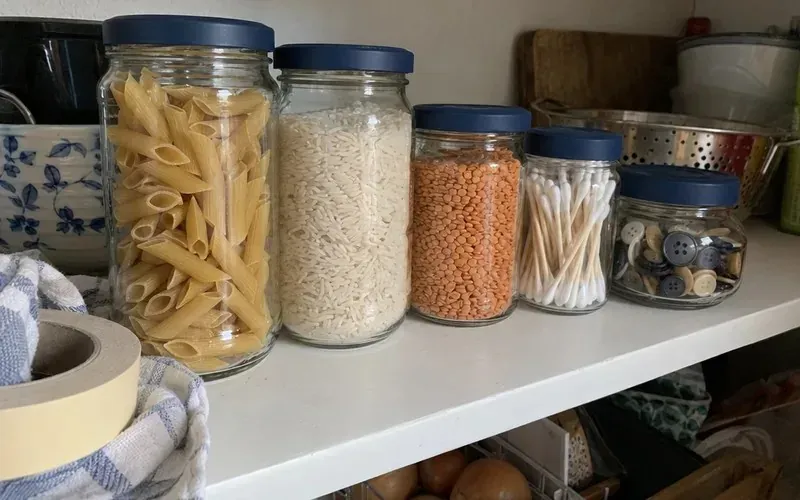
One jar can become any of these:
- A drinking glass, if it’s a wide-mouth Mason jar
- A bathroom holder for cotton swabs
- A lantern with fairy lights or a tea light inside
- A spice jar with a labeled lid
Mismatched lids give away where each jar came from. Paint just the lids in one color, and a shelf of mixed jars looks like a set.
Old candle jars work the same way once the wax is out, and we have more ways to reuse candle jars.
Skip it if your cupboards are already full of jars.
2. Cardboard Boxes and Cereal Boxes
A cereal box can become a magazine holder in one afternoon.
Shoe boxes do the same job inside a drawer, splitting one messy space into small, tidy ones.
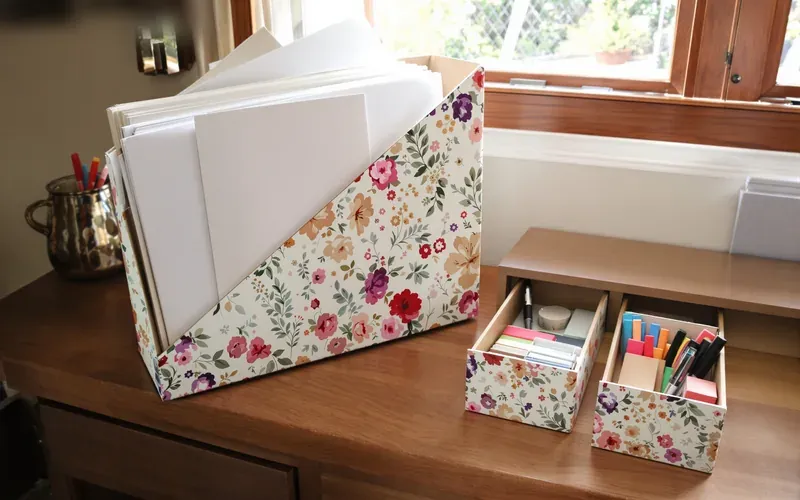
Here’s how it works:
- Cut a diagonal line down both narrow sides, from the top of the back to partway up the front.
- Cut the front panel down to match, so it looks like a magazine file.
- Cover it with wallpaper scraps, wrapping paper or paint, and let it dry overnight.
Shoe boxes need even less work. Cover the lid and the box separately, then drop them into a drawer as dividers.
Skip it if the box will sit somewhere damp.
3. Plastic Bottles
Plastic bottles make free mini greenhouses that help seeds sprout.
Cut the bottom off a clear bottle and set it over a pot.
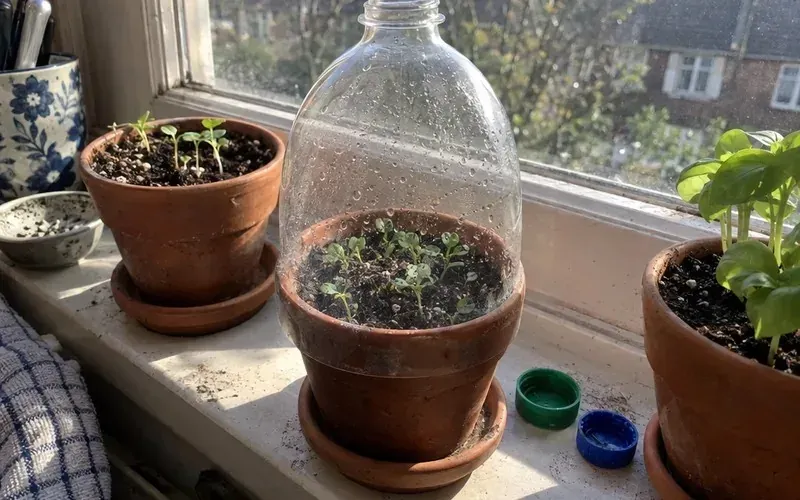
The dome keeps the soil moist and blocks cold drafts.
Too much moisture is the usual problem once the sprouts appear. If the inside stays fogged up, twist off the cap so the seedlings get air.
The same trick helps herbs you regrow from kitchen scraps through their first weeks. It also works for easy foods to grow at home, like tomatoes and lettuce.
Skip it if you don’t grow anything.
4. Tin Cans
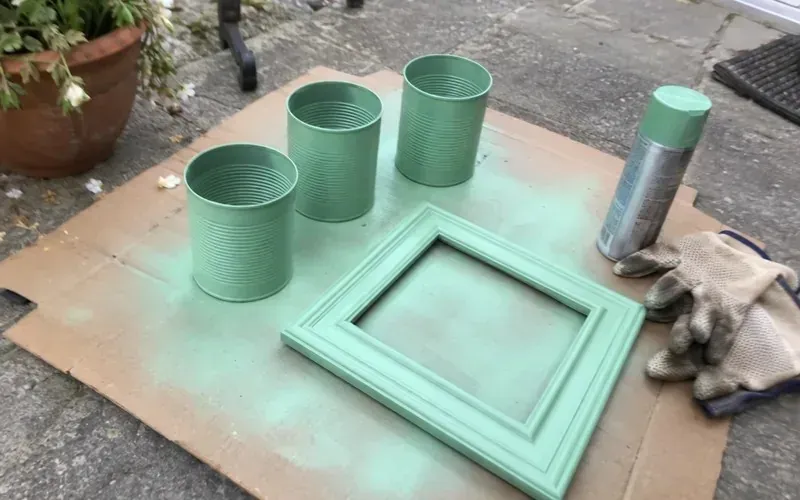
Tin cans become utensil holders, pencil cups, planters and candle holders.
They’re sturdy and free, and paint grips them well once they’re clean and dry.
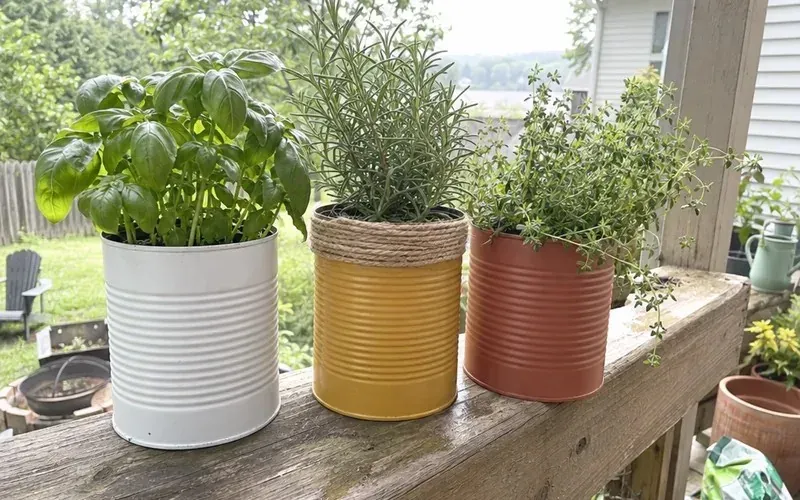
Rust-Oleum describes its Industrial Choice line as coatings for wood, metal and masonry. That means one can of spray paint covers a tin can, a crate and a clay pot.
Here’s the deal: a raw can rim can cut you.
Trim sharp bits with tin snips or a metal file, or cover the edge with washi tape or twine. For planters, punch a few drainage holes in the bottom with a hammer and nail before you spray.
Skip it if you can’t smooth a sharp rim.
5. Old T-Shirts
An old T-shirt becomes a no-sew tote bag in one evening.
Cotton jersey doesn’t fray when you cut it, so you don’t need a sewing machine.
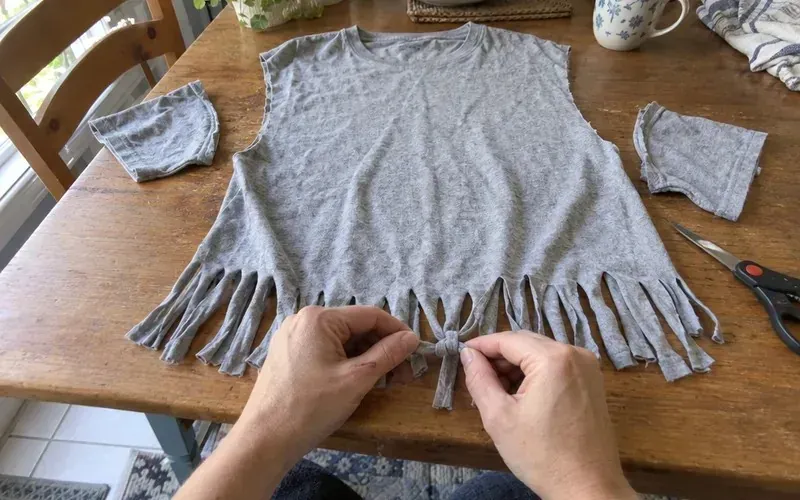
Cut off both sleeves just inside the seams to make the handles, then cut a wider scoop around the neck.
Turn the shirt inside out, cut short strips up from the hem and tie each front strip to the back strip behind it. Turn it right side out, and the knots close the bottom.
The best part? Nothing goes to waste.
Cut the leftover sleeves into strips and braid them into coasters or a small rag rug.
Skip it if the shirt is thin or full of holes.
6. Ice Cube Trays and Bakeware
An ice cube tray, a muffin tin and a couple of loaf pans can tidy a junk drawer fast.
Each one becomes a small compartment, and together they fill the drawer side by side.
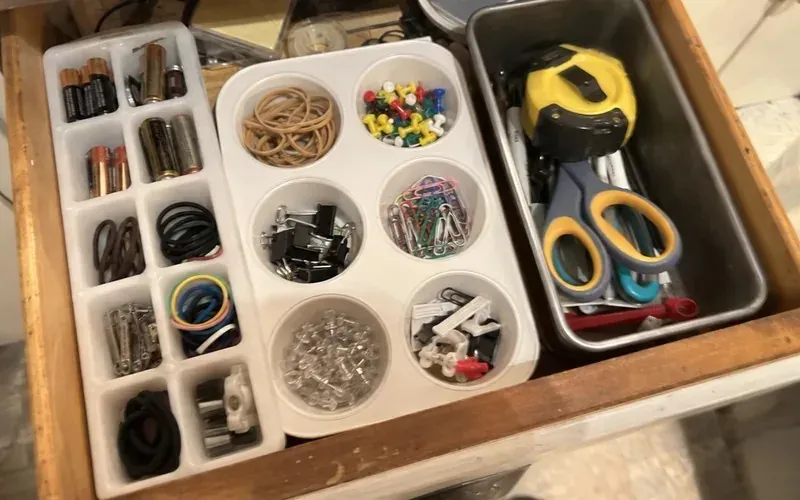
Measure the drawer before you start, so every tray and tin you keep actually fits. Toss what’s truly junk, then arrange the containers in the empty drawer until they fit snugly.
Give them 2 coats of spray paint so the mix of steel, aluminum and plastic looks like one set. The ice cube tray holds batteries and hair ties, while a loaf pan holds the big stuff.
Skip it if you still bake with those pans.
7. Wine Bottles
Empty wine bottles make water carafes, bud vases and table lamps.
With the label soaked off, a clear or green bottle looks good on a table with nothing added.
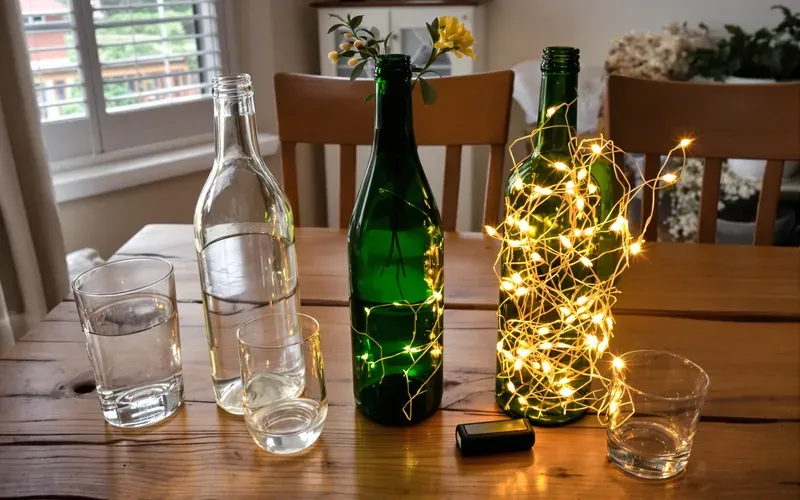
Fairy lights turn a bottle into a lamp. Feed a string of battery lights through the neck, leave the battery pack outside and set it on a shelf.
Cutting bottles into drinking glasses takes special tools, so it’s in the long shots section below.
Skip it if you’d have to buy wine to get bottles.
8. Wine Corks
Wine corks make coasters, trivets and bulletin boards.
Cork handles heat well, so a cork trivet protects your table from hot pans.
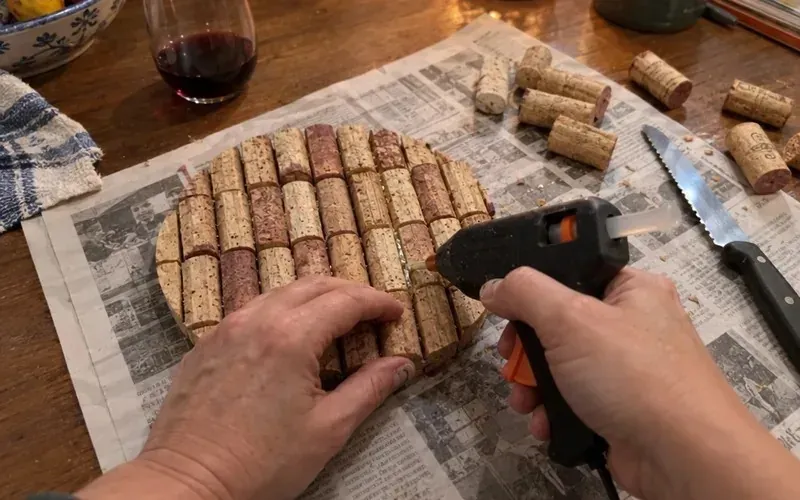
To make a trivet:
- Soak the corks in boiling water to soften them, then let them dry.
- Cut each cork in half the long way with a serrated knife.
- Glue the halves flat side down in rows with hot glue or wood glue, and add a felt circle underneath.
For a bulletin board, glue whole corks upright inside an old picture frame. Pins go straight in, and the frame hides the rough edges.
If you collect more corks than you need, you can also sell wine corks for extra cash.
Skip it if your corks are plastic.
9. Old Jeans
Denim is tough, so old jeans outlast almost any other fabric you upcycle.
That makes them a good fit for things that get pulled, chewed or washed a lot.
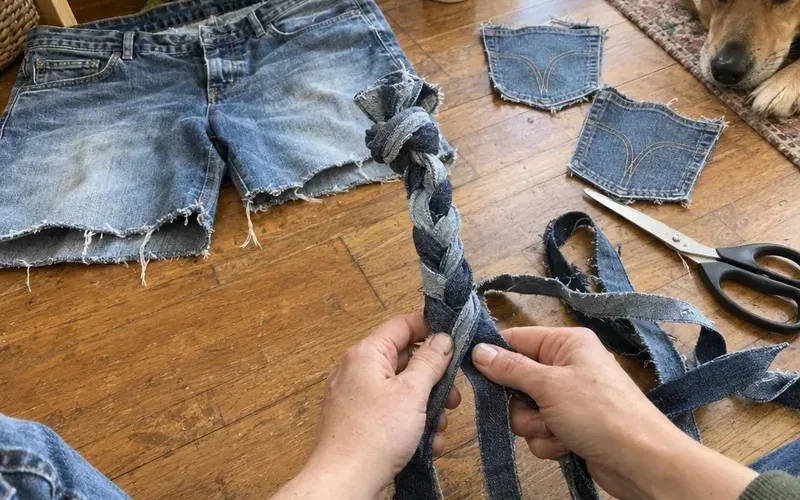
One pair can become:
- Dog toys braided from strips, with knots at each end
- Pocket organizers glued onto a board
- Planter covers that wrap around plain pots
- A denim skirt, if you can sew a straight seam
The thick seams are the hard part. Use sharp fabric scissors, and save the seams to braid into rugs instead of cutting through them.
Skip it if you hate cutting thick fabric.
10. Sweaters
An old sweater makes a soft pillow cover.
The knit already has a finished hem and a soft feel.
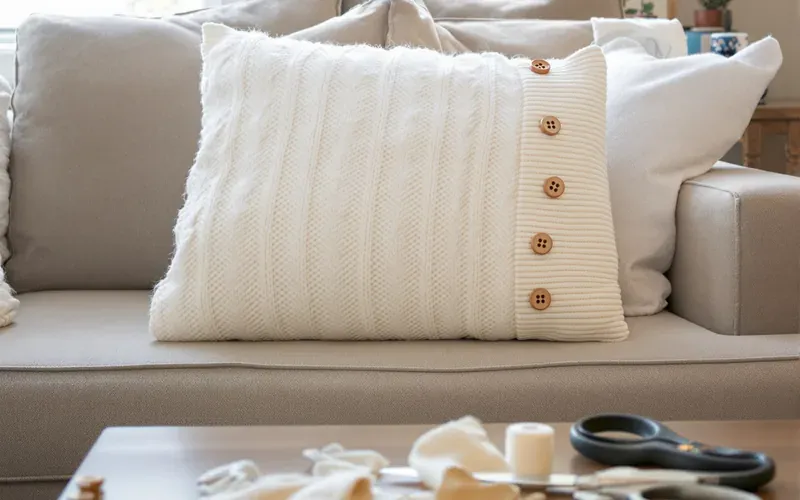
Sewing the cover is simple:
- Turn the sweater inside out and cut a square a little larger than the pillow insert.
- Sew 3 sides, turn it right side out and slide in the insert.
- Close the last side by hand, or add buttons so you can wash it.
Wool sweaters give you one more option.
Wash them hot to shrink them into thick felt, then cut the felt into coasters that won’t fray.
Skip it if the knit is unraveling.
11. Old Drawers
A drawer without its dresser is still a solid wooden box.
Hang it as a wall shelf, add casters for under-bed storage, or line it and fill it with soil as a planter.
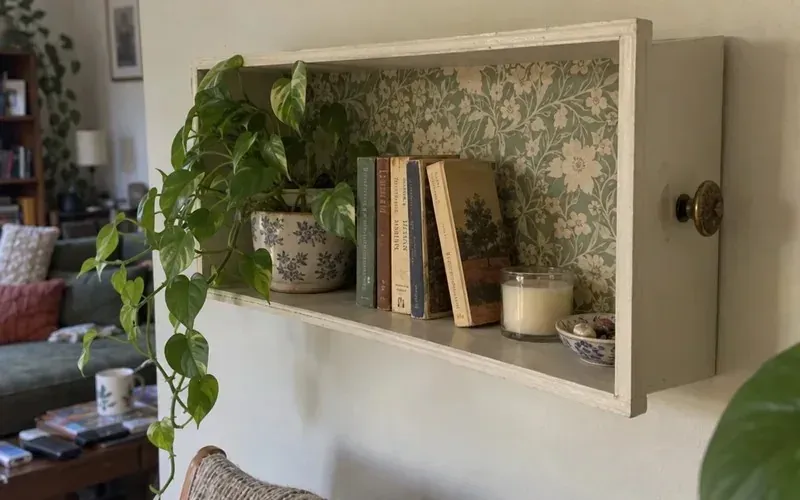
Turned on its side, a drawer becomes a shadow-box shelf with a built-in back. Line the inside with wallpaper scraps and paint the outside to match your wall, so the inside stands out.
The catch? A loaded wall shelf is heavy.
Find the wall studs with a stud finder and screw into at least one, rather than trusting drywall anchors alone.
Skip it if the bottom panel is split.
12. Wooden Crates
Wooden crates stack into bookshelves, side tables and even a patio table.
They’re built to carry heavy loads, so they hold books and plants without sagging.
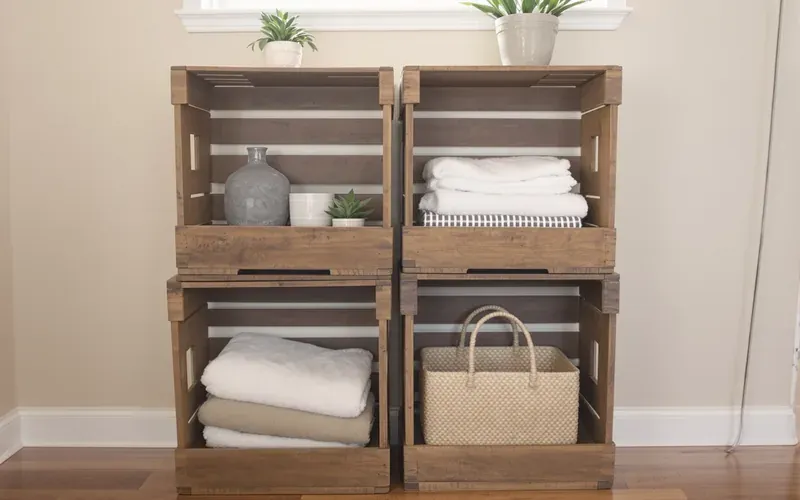
Sand and stain the crates before you stack them. Then screw them to each other so they can’t slide apart.
Wine shops and produce stands often have spare crates.
Here’s what to say when you call:
Hi, do you ever throw out empty wooden crates? I’d be happy to pick some up this week.
Skip it if the crates are splintered or moldy.
13. Window Shutters
A louvered shutter makes a memo board that needs no pins.
Prop it against a wall with the slats pointing up, and the louvers become slots for notes, cards and paint chips.
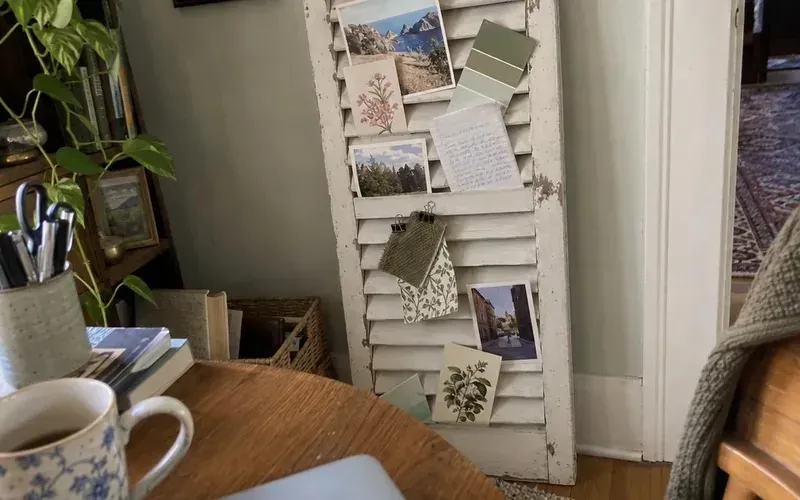
Binder clips hang bigger papers from the louvers too.
Old painted shutters need one check first. Paint on older wood can contain lead, so never sand it, as the safety section explains.
Once it passes that check, a shutter also works as a cabinet door.
Skip it if the paint is flaking.
14. Old Suitcases
Vintage suitcases stack into a side table with storage inside.
Stack 2 or 3, largest at the bottom, and top them with glass or a plywood board.
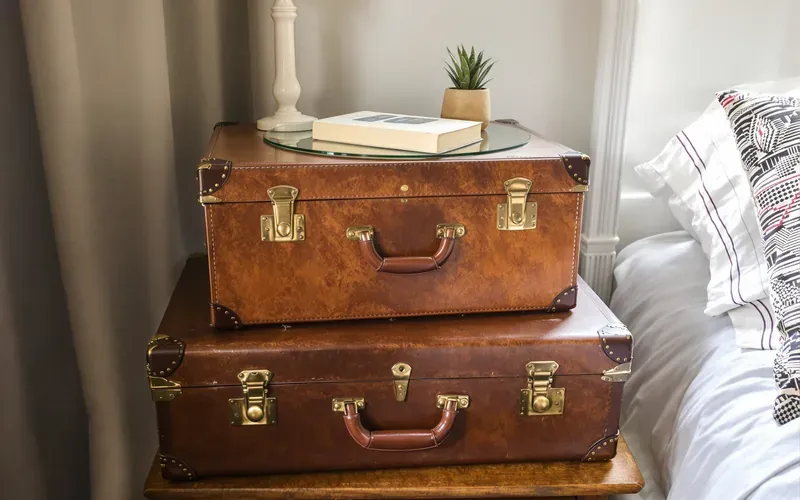
Glue or screw the stack together so the cases don’t slide when you open the top one.
A single flat case also slides under the bed for spare sheets. Lined with a cushion, it makes a pet bed.
Skip it if the cases smell musty.
15. Old Chairs
A wobbly or ugly chair can get a fresh seat or become a plant stand.
Most kitchen chairs have a seat that unscrews from below, which makes new fabric simple.
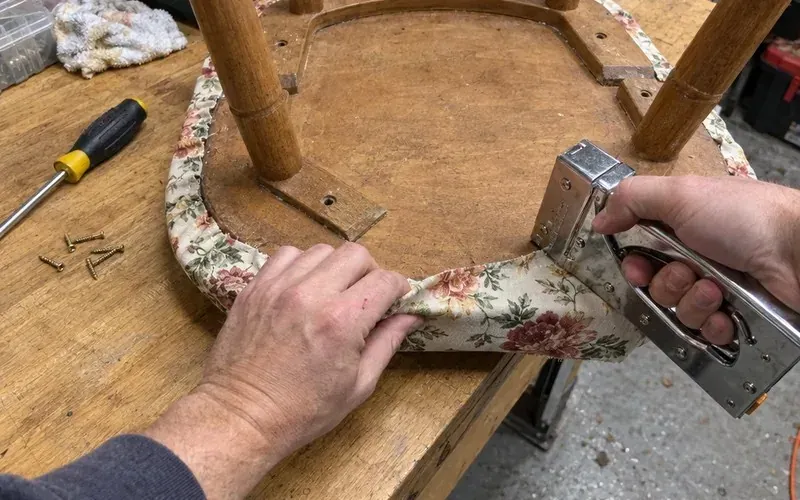
Recovering the seat works like this:
- Unscrew the seat and lay it upside down on your fabric.
- Cut the fabric a few inches larger than the seat on every side.
- Pull it tight, staple the middle of each side first, then work out to the corners.
For a plant stand, take the seat out and drop a pot into the frame. Spray paint the frame first, and a mismatched chair looks planned.
Skip it if the frame is cracked.
16. Shipping Pallets
A shipping pallet becomes a wall rack for garden tools or a vertical garden.
The slats are already spaced for hooks or plants, so most of the work is prep.
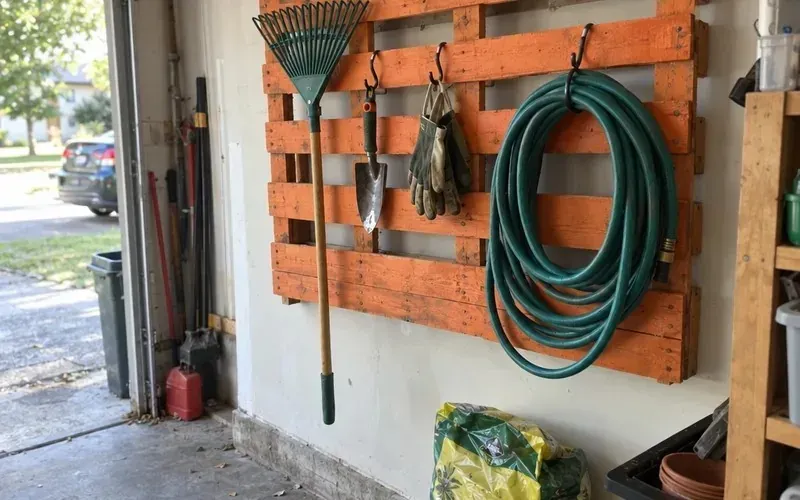
Big-box stores often send pallets back for reuse, so smaller shops are your best bet for a free one.
Before anything else, check the stamp on its side, as the safety section explains. Then sand it, clean it with a bleach and water mix, and prime and paint it.
Mount it with a French cleat screwed into the wall studs, and hang tools from S-hooks. For a vertical garden, staple landscape fabric to the back, fill the gaps with soil and plant herbs in the slots.
Skip it if you can’t lift and mount something heavy.
17. Old Dressers
An old dresser is the biggest upcycle on this list, and paint does most of the work.
A two-tone finish, with the body in one color and the drawers in another, makes a plain dresser look custom.
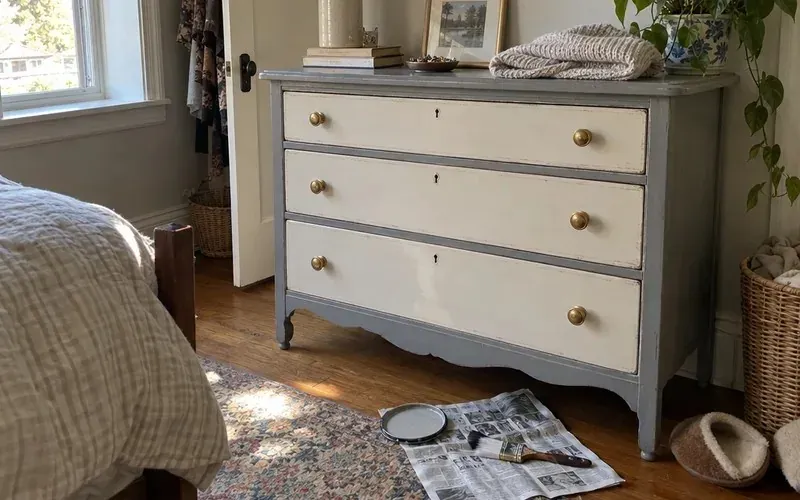
Before you paint:
- Remove every knob and pull, and save the screws
- Clean it with a degreaser, since grime stops primer from sticking
- Scuff-sand glossy surfaces and wipe off the dust
- Prime, then add 2 thin coats instead of 1 thick one
New hardware finishes the look.
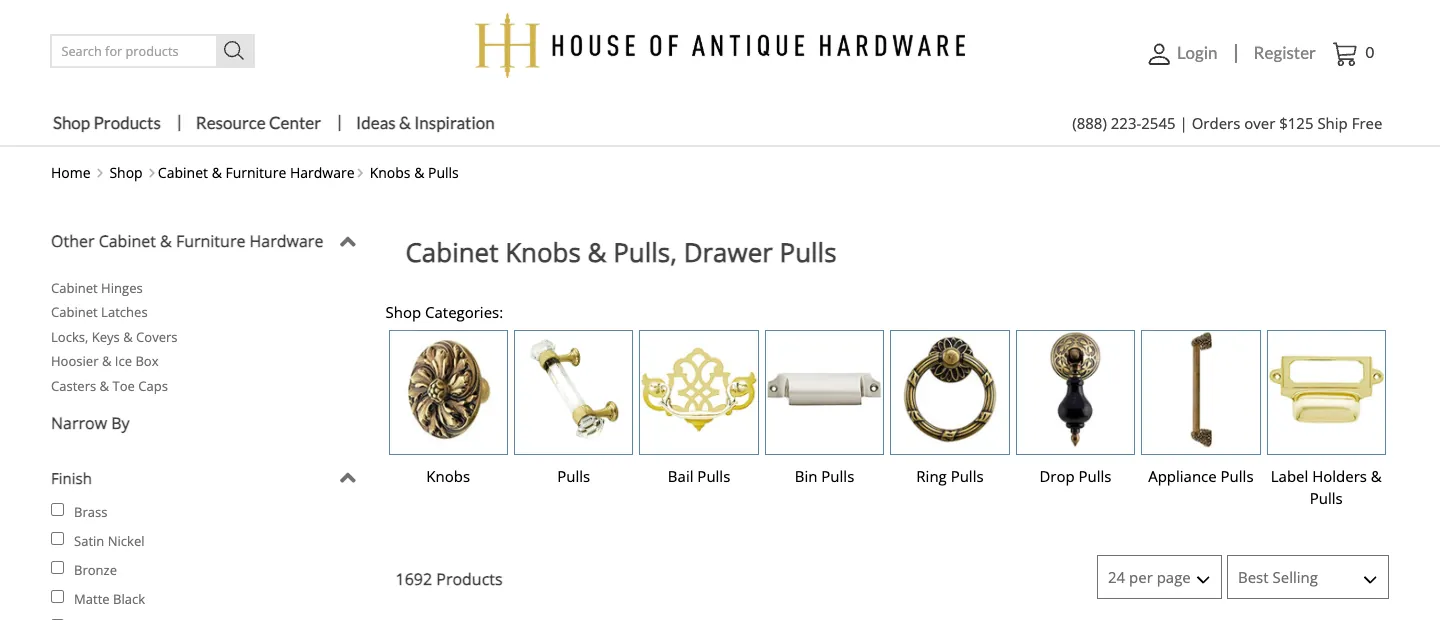
House of Antique Hardware, a store in Portland, Oregon, has sold reproduction hardware since 1999. Old-style knobs and pulls like those can make a dated dresser look antique on purpose.
You can furnish an apartment with no money the same way, starting with free finds.
Skip it if the drawers stick or the frame wobbles.
Long Shots Worth Knowing About
Some upcycles need special tools, plumbing or heavy lifting rather than paint and glue.
These 4 are the long shots, with who each suits and what stops most people:
- Dresser into a bathroom vanity: suits anyone with woodworking skills. The hard part is cutting for the sink and the plumbing.
- Bathtub into a garden pond: suits big yards. The hard part is moving and sealing a heavy tub.
- Old door into a headboard: suits high ceilings. The hard part is fixing a heavy door safely to the wall.
- Wine bottles into drinking glasses: suits patient crafters. The hard part is the bottle cutter, the sanding and the risk of cuts.
Things You Can Upcycle to Sell
The things you can upcycle to sell include bike chain jewelry, painted furniture and denim goods, since each starts from free or cheap materials.
Upcycled goods do sell. Paguro Upcycle, a shop based in Nottingham, England, says on its homepage that it has been upcycling since 2012.
It turns inner tubes, bike chains, motorbike tires and old skateboard decks into bags, jewelry and belts.



Here are 3 ways to start selling your own:
- Bike chain jewelry: Paguro says the chains for its bracelet come from repair shops in Nottingham, and the bracelet is one of its best sellers. First step: ask a local bike shop for worn chains and grab needle-nose pliers.
- Painted furniture: a refinished chair or dresser from #15 or #17 sells on clear before and after photos. First step: photograph the piece before you touch it.
- Denim goods: dog toys and planter covers from #9 are cheap to make in batches. First step: cut 3 pairs of jeans at once.
Small items you can ship sell well on eBay or Mercari, and these Mercari selling tips help them sell faster. Furniture is easier to sell through local listings, since buyers pick it up.
Before you pick a project, see which things sell fast where you live.
Upcycling Projects for Kids and School
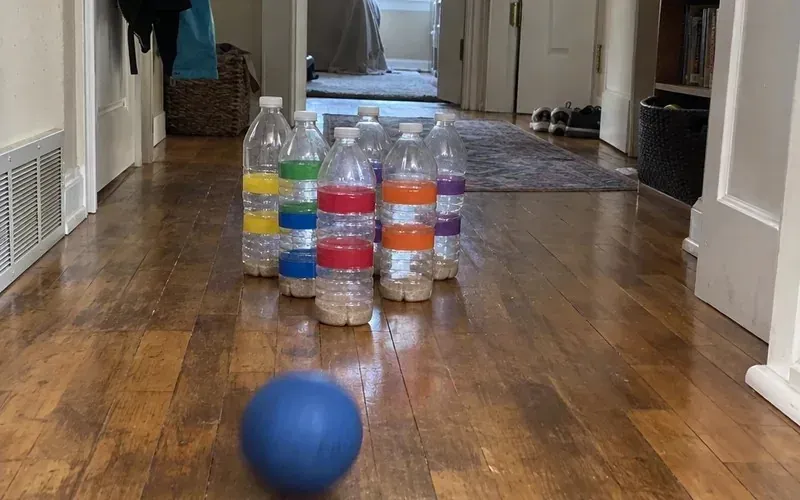
The best upcycling projects for kids use soft, safe materials like cardboard, plastic bottles, egg cartons and tin cans with taped rims.
Bottles filled with a little sand make a bowling set, and a big cardboard box becomes a play kitchen.
Cereal boxes from #2 make pencil holders kids can decorate themselves.
For a school project, pick one item and show the whole process. Photograph it before you start, list what you used, then photograph the finished piece.
If your kids get hooked, these free hobbies keep the habit going at no cost.
The Basic Upcycling Kit
A basic upcycling kit is 6 things, and most homes already have half of them:
- Spray paint with primer
- Medium and fine sandpaper
- A hot glue gun
- Sharp scissors and a utility knife
- A drill and a stud finder for hanging things on walls
- Clear varnish or shellac
Paint smell is the usual complaint when you upcycle indoors.
Rust-Oleum says its water-based Low Odor Spray Paint has 40% less odor than traditional spray paint. It works on wood, metal, glass, wicker and most plastics, which helps in a garage or small apartment.
Still, open a window or paint outside when you can.
If you buy the kit new, these ways to save at Home Depot cut the cost.
Where to Find Free Things to Upcycle
The best free things to upcycle come from your recycling bin, the curb on trash day and small shops with spare crates and pallets.
Jars, cans, boxes and bottles show up at home every week. Furniture, drawers and shutters show up at the curb, especially at the end of the month when people move.
Online, check the free sections of online flea markets.
If you don’t mind getting your hands dirty, curbside and dumpster finds can supply furniture for months.
Safety Checks Before You Start
Upcycling is mostly safe, but 3 things need a check before you start: old paint, shipping pallets and glass.
Old paint shows up on shutters, doors and furniture. The EPA says homes built before 1978 are more likely to have lead-based paint, and it advises against removing lead paint yourself.
Never sand or scrape old paint. If it’s in good shape, add a clear coat of polyurethane or acrylic varnish on top, and skip any piece with flaking paint.
If you’re not sure, a lead test kit from a hardware store can check it before you start.
Pallets carry a stamp that tells you how the wood was treated. Look for “HT,” which means heat-treated, and skip any pallet stamped “MB,” which means it was treated with methyl bromide, a pesticide.
Skip a pallet that’s stained or smells too, since it may carry spills you don’t want near food, kids or a garden.
Glass is the last one. Wear gloves and safety glasses to cut or drill glass, and sand every cut edge smooth.
When in doubt, pick a project with no cutting, since most of this list never needs a blade on glass or metal.
Key Takeaways
- Start with what you throw away. Jars, boxes, bottles and cans are free and take one day.
- Paint does most of the work. One color on mismatched jars, tins or drawers makes them look like a set.
- Big pieces take a week. Dressers, chairs and pallets need time for primer and paint to dry.
- Some upcycles sell. Bike chain jewelry, painted furniture and denim goods start from cheap materials.
- Check before you start. Never sand old paint, skip pallets stamped MB, and wear gloves around cut glass.
Frequently Asked Questions
What are the easiest things to upcycle for beginners?
Glass jars, cardboard boxes, plastic bottles and tin cans are the easiest things to upcycle. Each needs only a wash and a little cutting, gluing or painting.
Start with #1, a set of matching jars, since it needs nothing but hot water and soap.
What’s the difference between upcycling and recycling?
Upcycling keeps an item whole and gives it a new use, like a wine crate that becomes a bookshelf. Recycling breaks the material down so a factory can make something new from it.
What can I upcycle old clothes into?
Old T-shirts make no-sew tote bags and braided rugs, old jeans make dog toys and pocket organizers, and sweaters make pillow covers. Pick one shirt you’d otherwise donate and turn it into a tote bag this week.
What can I make out of old furniture?
An old dresser can get a two-tone paint job, a chair can become a plant stand, and a drawer can become a wall shelf. Start with a piece that’s sturdy but ugly, since paint fixes looks but not wobbly joints.
How can I upcycle things into Christmas decorations?
Mason jars with fairy lights make window lanterns, wine corks make small ornaments, and tin cans make candle holders with punched holes. Each one starts with the same prep as its project in the list, just in holiday colors.
Do you need special tools to upcycle?
No, most upcycling projects need only scissors, a glue gun, sandpaper and a can of spray paint. A drill helps for anything that hangs on a wall, and you can borrow one before you buy.
The Bottom Line
The fastest upcycles use things you already throw away every week, like jars, boxes, bottles and cans.
Save 3 glass jars from the recycling bin this week and turn them into a matching set by Sunday. For more ways to spend less around the house, browse our save money guides.

Jason is a personal finance expert and the founder of Frugal For Less. He has spent over a decade researching and testing hundreds of money making apps, survey sites, and savings strategies to help readers earn more and keep more of their hard-earned cash.
More about the author