Dying Jobs: 10 Careers on Their Way Out and How to Get Ahead

Dying jobs are careers that keep shrinking because apps, software and AI now do most of the work. Most still have openings, but fewer people get hired for them every year.

Disclosure: This post may contain affiliate links. As an Amazon Associate, we earn from qualifying purchases. This comes at no extra cost to you. Read our full disclosure, or see how we review platforms.
Dying jobs are careers that keep shrinking because apps, software and AI now do most of the work. Most still have openings, but fewer people get hired for them every year.
Worried your job might be on its way out? Or maybe you’re picking a career and want to avoid a dead end.
This guide covers 10 dying jobs, why each one is shrinking, and what to do if yours made the list.
Most of these jobs aren’t vanishing overnight. But the work they’re built on is being handed to software, apps and AI, and that shift isn’t slowing down.
How We Picked These Dying Jobs
Every job on this list shows up again and again on rankings of the fastest-declining occupations. Those rankings usually draw on employment projections from the Bureau of Labor Statistics, the US agency that tracks jobs and wages.
But I didn’t just copy one ranking. Instead, I looked for jobs that share the same warning signs:
- The core tasks follow clear, repeatable rules
- Customers can now do the task themselves with an app or kiosk
- Software or AI can do the work faster and cheaper
- Demand for the end product keeps falling
A job that hits two of these signs is under pressure, whether it sits in an office, a store or a manufacturing plant. One that hits all four is a true dying job, even if it still has some openings as older workers retire.
10 Dying Jobs to Watch Out For
Each of these 10 jobs is losing ground to self-service tools, software or AI. The table shows what is taking over the work in each one.
| Dying job | What is taking over the work |
|---|---|
| Cashiers | Self-checkout, tap-to-pay and online ordering |
| Data entry keyers | Document scanning tools and AI |
| Bank tellers | Banking apps and ATMs |
| File clerks | Cloud storage and document search |
| Payroll and timekeeping clerks | Payroll software |
| Customer service representatives | Phone menus and chatbots |
| Telemarketers | Spam call filters and online ads |
| Executive secretaries and assistants | Scheduling tools and shared inboxes |
| Prepress technicians | Print-ready digital files |
| Postal service workers | Email and automated mail sorting |
1. Cashiers
Think about your last trip to the grocery store. There’s a good chance you scanned your own items at a self-checkout kiosk.
That’s the problem for cashiers. Self-checkout, tap-to-pay and mobile ordering all cut the need for a person at the register.
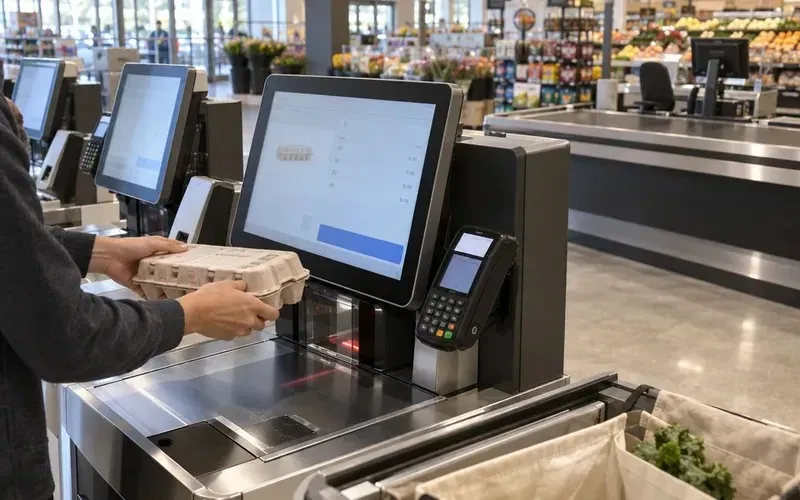
E-commerce adds even more pressure. When you order online for delivery, no cashier touches the sale at all.
If this is your job, your people skills are the real asset. Sales roles and patient-facing jobs in health care use those skills in ways a kiosk can’t.
2. Data Entry Keyers
Data entry keyers type information from forms, invoices and receipts into computer systems. It’s steady work, but it’s also exactly the kind of task software handles well.
Today, scanning tools can read a document and fill in the fields on their own. AI takes that further by pulling details out of messy files that used to need a human eye.
The upside is that you already know what clean, correct records look like. A short course in spreadsheets or basic analytics can turn that habit into a skill employers are still hiring for.
3. Bank Tellers
Why visit a bank when your phone can do the job? Banking apps let you deposit checks, move money and pay bills from your couch.
ATMs cover most of the cash needs that are left. So banks now staff their branches with fewer tellers.
Tellers who know their customers well can move into roles like personal banker or loan assistant. In those jobs, advice matters more than counting cash.
4. File Clerks
File clerks organize and maintain records, both paper and digital. But fewer offices keep paper files these days.
Cloud storage and document software let anyone find a file with a quick search. That turns a full-time role into a small part of someone else’s job.
5. Payroll and Timekeeping Clerks
Payroll clerks used to calculate hours, wages and deductions by hand. Now payroll software does that math automatically and sends the payments too.
Even small businesses can run payroll in-house without a dedicated expert.
The result is smaller payroll teams. The clerks who stay tend to manage the software instead of doing the math.
6. Customer Service Representatives
Customer service isn’t going away. But a lot of the routine work behind it is.
Automated phone menus and chatbots now handle simple questions like order status or password resets. In 2023, Stanford economist Nicholas Bloom told CNBC he expected AI to replace mostly repetitive remote roles, like customer service reps and receptionists.

Customers with complex problems still want a real person, though. So the reps who stay in demand will handle the harder issues a bot can’t solve.
7. Telemarketers
Most consumers screen unknown calls now, and many phones flag spam automatically. That makes cold calling a tough way to reach customers.
At the same time, businesses have moved their marketing budgets to email, social media and online ads. Fewer sales calls means fewer telemarketing jobs.
Your phone and persuasion skills still have value, though. They carry over well to inside sales and account management, where you talk to people who already want to hear from you.
8. Executive Secretaries and Administrative Assistants
Executives used to rely on an assistant to manage calendars, type letters and book travel. Today, scheduling tools, shared inboxes and virtual assistants handle much of that work.
That doesn’t mean every assistant role is gone. But the job is shrinking toward people who manage projects, not just paperwork.
To stay ahead, learn the project tools your team already uses. Then volunteer for planning work that needs your judgment, not just your typing speed.
9. Prepress Technicians
Prepress technicians get files ready for printing. In the past, that meant hands-on work like typesetting each page before it went to the press.
Digital publishing changed all of that. Designers now send print-ready files straight to the printer, and a lot of what people read never gets printed at all.
10. Postal Service Workers
Email replaced most personal letters years ago, so far less mail moves through the system. On top of that, machines now scan and sort mail faster than people can.

Carriers still deliver routes every day. But the sorting and counter jobs inside post offices keep shrinking.
Why These Jobs Are Dying
Look closely at that list and you’ll spot a pattern. Jobs die when their main task follows rules a machine can copy.
Technology is the biggest driver, since automation handles repeatable steps with ease.
Artificial intelligence goes a step further. It handles tasks that need some reading or writing, like sorting emails or reading forms.
This pattern isn’t new. Think of lamplighters, who once lit gas street lamps by hand until electric lighting made the job disappear.
Film projectionists went through the same shift once digital movies took over. Today’s dying jobs are simply the next round.
Remote Routine Jobs Are the Easiest to Move
Where you work matters too. A 2023 CNBC report found companies were hiring fewer people for remote roles that cheaper overseas workers or AI could take over.
That was a big change from the early pandemic. At the height of the COVID-19 pandemic, close to half of Americans worked from home full-time, up from about 2% before it.
By 2023, Bloom said less than 10% of US workers had a fully remote job.
Put simply, a routine job that anyone could do from anywhere is the easiest one for employers to move or automate.
Is Your Job Dying? A Simple 3-Step Check
Not sure where your own job stands? Here’s the quick process I recommend.
- List your five biggest tasks. Write down the five tasks you spend the most time on each week. Be honest about how much of each one is routine.
- Ask if a machine could do each one. For every task, ask: could an app, a kiosk or a piece of software do this? If the answer is yes for most of them, your role is at risk.
- Check the job listings for your title. Search for openings under your exact job title. If listings are thinning out or asking for new skills, that’s your signal to start planning.
Don’t wait for a layoff to act. It’s much easier to learn a new skill while you still have a steady paycheck.
It also helps to build some savings now, so a surprise layoff doesn’t force you to take the first job you find.
How to Move From a Dying Job to a Growing One
Here’s the good news: the skills from a dying job rarely go to waste, and a little extra training makes a big difference. A bank teller already knows customer service, cash handling and basic finance.
The trick is to add one in-demand skill on top of what you already know. Skills like data analysis, digital marketing and IT support are useful across a wide range of employers.

Let me show you how that works. Say you’re a payroll clerk who already understands wages, deductions and deadlines.
A short course in bookkeeping or payroll systems could move you into a role that runs those systems instead of feeding them. That’s a much safer spot than doing the math by hand.
You don’t need a four-year degree to start, either. Google offers career certificates through Coursera.
Microsoft also runs free training programs focused on digital and AI skills. Pick one course that fits the job you want next, and finish it before you start another.
Soft skills count too. Employers still want people with clear communication, quick adaptability and critical thinking, and machines are weak at all three.
Jobs That Will Stick Around After 2030
So which jobs are safest? Look for roles that need hands-on care, specialized skills or human judgment.
Nurses and other healthcare professionals are a classic example. Caring for patients means reading body language, making quick decisions and offering comfort, and that’s hard to automate.
Specialized knowledge helps too. According to economist PJ Lambert, the remote jobs with the best prospects require specialized skills that a cheaper overseas worker or AI can’t easily replace.
Finance is a good example. In 2023, Lightcast data reported by CNBC showed remote jobs still made up about 22% of open finance roles.
What this means for you: the jobs that last mix a human strength, like care, judgment or creativity, with real technical know-how. Build toward that mix and you’ll be in a much stronger position.
Frequently Asked Questions
What professions are declining?
The professions declining fastest are mostly routine office, retail and production jobs. Cashiers, data entry keyers, bank tellers, file clerks, payroll clerks, telemarketers, prepress technicians and postal workers all show up on lists of shrinking occupations.
What jobs will no longer exist in 10 years?
Very few jobs vanish completely in 10 years, because some openings remain as people retire or change careers. But jobs built on routine data entry, filing, cold calling and manual checkout will likely shrink to a small fraction of what they once were.
What 5 jobs will remain after 2030?
No one can promise a job is safe, but roles that need hands-on care, specialized skills or human judgment are strong bets. Nurses, software developers, financial analysts, marketing managers and graphic designers are five good examples.
What to do when you are out of work?
Start by applying for unemployment benefits in your state, since they can buy you time to plan. Then update your resume around the skills that transfer from your old job, and add one in-demand skill through a short online course. While you look, gig work or other quick ways to get cash can help cover the bills.
The Bottom Line
Dying jobs don’t disappear overnight, but the routine tasks behind them keep moving to software, apps and AI. The smartest move is to spot the warning signs early and add one skill that a machine can’t easily copy.
So here’s my question for you: which skill are you going to start learning this week?

Jason is a personal finance expert and the founder of Frugal For Less. He has spent over a decade researching and testing hundreds of money making apps, survey sites, and savings strategies to help readers earn more and keep more of their hard-earned cash.
More about the author →
Want to learn how to make an extra $1,000 per month?
Download our free guide with:
- 10 Side Hustles to Make $1,000/month
- Worksheet for setting money making goals
- Resource List to help you succeed