Does Living in a Tiny House Save You Money? Here's the Real Math

Living in a tiny house can save you money, but only if what you save each month pays back the price of the house.

Disclosure: This post may contain affiliate links. As an Amazon Associate, we earn from qualifying purchases. This comes at no extra cost to you. Read our full disclosure, or see how we review platforms.
Living in a tiny house can save you money, but only if what you save each month pays back the price of the house.
A tiny house costs just over $45,000 to build on average, not counting land, according to SoFi.
Next to the $434,000 median price of a regular home that SoFi quotes from Redfin, that sounds like an easy way to stop paying rent.
The price tag is only half of the answer.
This guide shows where the savings come from, the 4 hidden costs that shrink them and a 5-step test for your own numbers.
Where a Tiny House Saves You Money
A tiny house saves you money in 3 places: a smaller mortgage or none, lower utility bills and less spent on stuff. How much you save depends on what you pay for housing now and how you pay for the tiny house.
Live in less space, and the bills that come with space shrink too.
A Smaller Mortgage, or No Mortgage at All
The biggest saving is the housing payment itself.
A regular home usually means decades of mortgage payments. A tiny house is small enough that some buyers save up and pay cash.
That changes your whole budget. With no mortgage or rent check, the money you used to send a lender can go to debt, savings or investing instead.
For most people, the money a tiny house frees up starts with getting rid of the monthly payment.
Lower Utility Bills
A smaller space takes less energy to heat, cool and light. You also have room for fewer appliances, so less runs in the background.
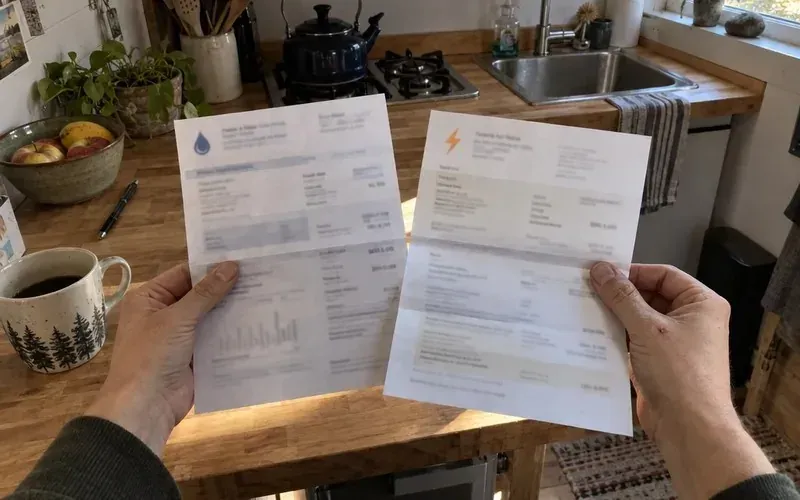
If you want to trim your power bill even more, unplugging devices that draw phantom energy works in any size home.
Water and gas can drop too, depending on your setup. You may also end up paying for a laundromat or extra fuel, so look at all your utilities together, not just the electric bill.
Want your own number?
Pull your last 12 months of bills from your utility company’s website and work out the monthly average. Then ask a lot host or a current owner in the same area what they pay each month.
The gap between the two is your real utility saving.
Less Room for Stuff
A tiny house also limits what you can buy. When every shelf is full, a new gadget has nowhere to go.
That built-in limit cuts impulse spending month after month.
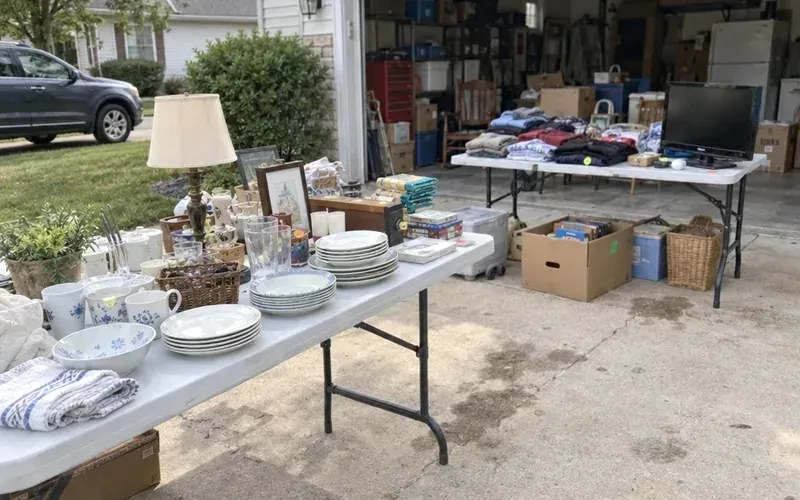
The move itself can even earn you money. Before you downsize, you can sell what you own that won’t fit and put that money toward the house.
The 4 Hidden Costs That Shrink Your Savings
Real estate school AceableAgent lists 4 big hidden costs of tiny homes: moving it, renting land or RV space, connecting utilities and lower resale value. Together, they can use up a big share of what you save.
These costs don’t show up in the listing price. Add each one to your budget before you compare a tiny house to your current rent or mortgage.
1. Land or Lot Rent
A tiny house still has to sit somewhere. SoFi notes that tiny house prices generally don’t include the land.
You either buy land, which is a big upfront cost of its own, or you rent a spot. Lot rent in a tiny home community, an RV park or a backyard is a monthly bill that can use up much of your savings.
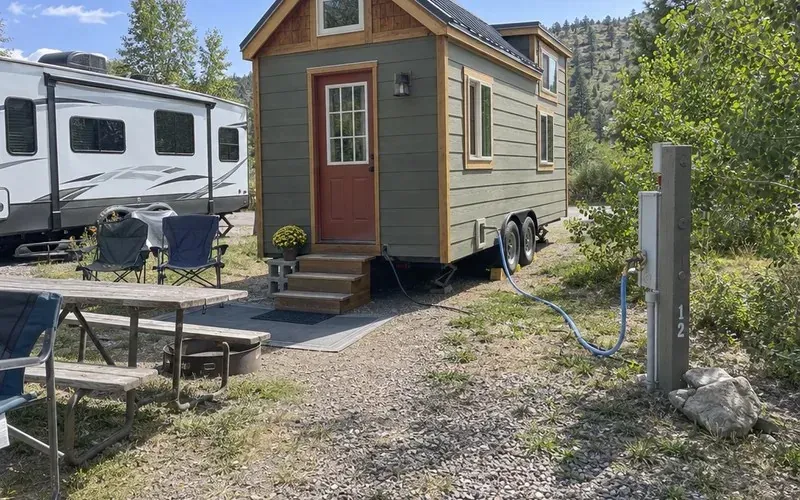
Backyard spots come from homeowners renting out space as a side hustle, much like other ways of making money from a backyard. Either way, get the full monthly price in writing before you sign.
Here’s what to ask any lot host:
What’s the monthly rent, and does it include water, power and sewer?
Is there a deposit, and how often can the rent go up?
2. Moving and Towing
A tiny house on wheels has to get from the builder to your lot.
If you plan to move it again later, you’ll need a truck that can tow it or a company to haul it each time. Either one is a real cost to add to your plan.
Ask the builder for a delivery quote before you buy. Then ask a hauling company what each later move would cost.
3. Connecting Utilities
Hooking a tiny house up to water, power and sewer takes money, and it isn’t always simple.
A spot with hookups already in place saves you that bill. An empty piece of land might need a well, a septic system or a long power line, which can cost more than you’d expect.
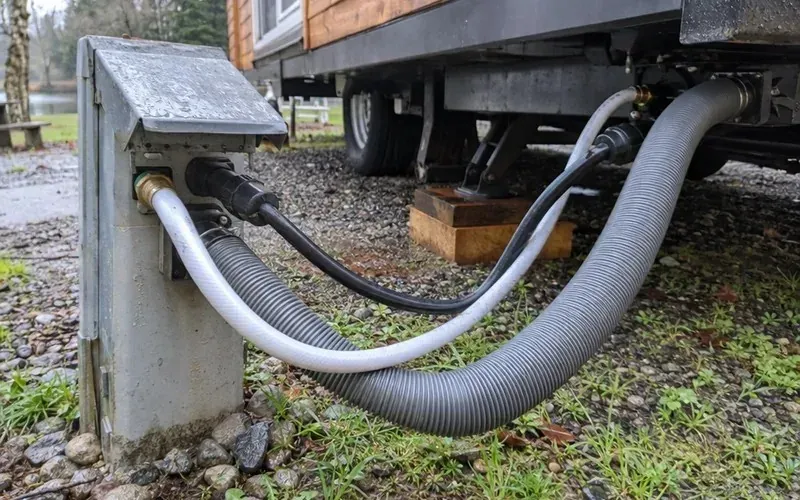
Ask for a written quote for each hookup before you buy land, and add it to the price of the house.
4. Lower Resale Value
A regular home builds equity as you pay it down, which is a big part of why owning a home makes money over time. Tiny houses often lose value instead, so they work better as a place to live than as an investment.
Plan as if you’ll sell your tiny house for less than you paid, and count that loss as part of what living tiny costs you.
Price the lot, the move, the hookups and the resale loss before you call any tiny house cheap.
How Zoning Rules Affect Your Savings
Zoning rules decide where you can legally live in a tiny house. AceableAgent warns that many cities haven’t updated their codes to include tiny homes.
A home you can’t legally park can cost you fines, a move or a lot you can’t use. That’s why the school’s advice is to check local codes and zoning laws before you buy or build.
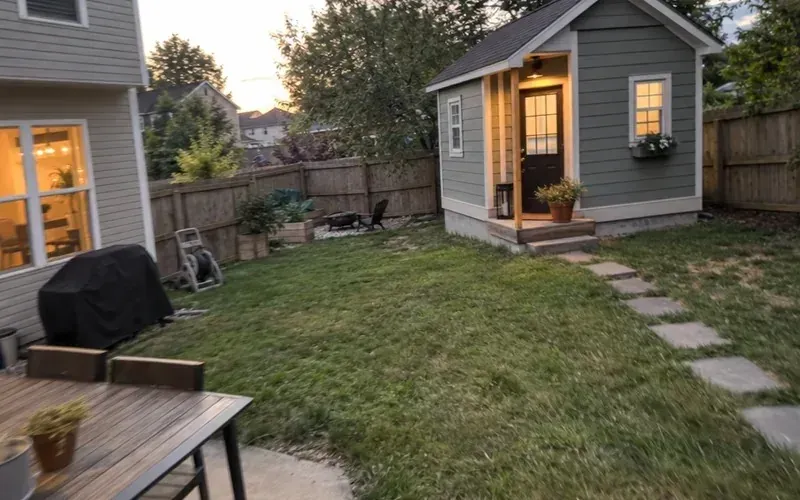
Your city may treat a tiny house as an accessory dwelling unit (ADU), a second small home on the same lot as a main house. ADU rules vary by city, so ask about them by name.
Here’s what to say when you call your city or county planning office:
I’m thinking about living full time in a tiny house at [address]. Is that allowed under current zoning?
Does it need to be on a foundation, or can it be on wheels? What permits would I need?
Write down who you spoke to and what they said. If the answer is no, a different lot is cheaper than a fine.
How to Tell If a Tiny House Will Save You Money
To find out, subtract a tiny house’s monthly costs from what you pay now, then divide its price by the difference. That gives you a break-even point, the number of months before you’re truly ahead.
Here’s how to run it:
- Add up what you pay now. Include rent or mortgage, utilities and renters or home insurance for one month.
- Price the tiny house you’d actually buy. Use a real quote, not the cheapest model you’ve seen online.
- Add the monthly tiny house costs. That’s lot rent, utilities, insurance and any loan payment.
- Find your monthly savings. Subtract the tiny house’s monthly costs from what you pay now.
- Divide the price by your savings. The answer is how many months it takes to earn the house back.
Here’s a worked example with made-up numbers.
Say you pay $1,500 a month in rent and $150 for utilities, so $1,650 in total. You buy a $60,000 tiny house with cash, rent a lot for $500 and pay $100 for utilities and insurance.
Your new monthly cost is $600, so you save $1,050 a month. Divide $60,000 by $1,050, and you break even in about 57 months, just under 5 years.
After that, you keep about $12,600 a year, which gets you well on the way to saving $20,000 in a year.
Now add resale. Say you sell after 7 years for $40,000, another made-up number.
You’d have saved $88,200 on housing, spent $60,000 on the house and gotten $40,000 back. That leaves you about $68,200 ahead of renting the whole time.
Now take the same house with a loan instead of cash.
Say your loan payment is $1,000 a month, again a made-up number. Your monthly cost jumps to $1,600, and you save just $50 a month until the loan is paid off.
Once the loan is gone, your savings jump back to $1,050 a month. But you’ve spent years of the plan getting almost nothing back.
In other words, paying cash or close to it is what makes a tiny house save you real money. A big loan can wipe out almost all of the monthly savings.
If you can’t pay cash, ask a lender how the home would be financed and what the monthly payment would be. Many tiny houses cost too little to qualify for a regular home loan, according to SoFi, so get the payment in writing before you decide.
Who Saves the Most Money in a Tiny House
People who save the most money in tiny homes pay cash, find cheap legal parking and stay for years. People who need big loans, pay high lot rent or plan to sell soon often save little.
Tiny living also isn’t for everyone. The National Association of Home Builders asked adults about it in a late 2017 poll.
In that poll, 53% said “yes” or “maybe” to buying a home under 600 square feet, so 47% weren’t open to it.
Interest fell with age, from 63% of Millennials to 29% of seniors.
Changing your mind costs money, since you’d be selling a home that tends to lose value. Be honest about how you’ll feel in a few hundred square feet after the first year.
A tiny house fits you best if:
- You can pay most of the price in cash
- You’ve confirmed a legal spot to park or build
- You plan to stay at least until you hit break-even
- You’re happy to own far less stuff
If that list doesn’t sound like you, other cheap housing alternatives might save you more with less risk. You can also save money on rent where you live now, or look at whether to buy a mobile home on land you own.
Already own a regular house?
Renting out spare rooms turns space you already have into rental income, which can shrink your mortgage without moving at all.
Key Takeaways
- Cash decides it. Paying cash or close to it is what turns a tiny house into real savings.
- The price is only the start. Land or lot rent, moving, hookups and resale loss all add to the cost.
- Check zoning first. Many cities haven't updated their codes to include tiny homes.
- Run the break-even test. Divide the price by your monthly savings to see how many months it takes.
- Plan to lose value. Tiny houses often sell for less than you paid.
Frequently Asked Questions
Is it worth living in a tiny house?
Living in a tiny house is worth it if you pay mostly cash, find affordable legal parking and stay until your savings repay the price. If you need a big loan or plan to sell in a few years, the math rarely works in your favor.
What are the downsides of living in a tiny house?
The biggest downsides are hidden costs and tight space: moving the home, land or lot rent, utility hookups and lower resale value. Zoning rules can also limit where you’re allowed to park or live in one.
How much does a tiny house cost?
A tiny house costs just over $45,000 to build on average, not counting land, according to SoFi. SoFi also cites HomeAdvisor data that tiny houses on wheels average $60,000 to $80,000, while ones on a foundation start at $51,000.
Do tiny houses lose value?
Tiny houses often lose value over time, and AceableAgent counts lower resale value among their hidden costs. Plan as if you’ll sell for less than you paid, and treat the home as a place to live rather than an investment.
Can you get a mortgage for a tiny house?
Many tiny houses cost too little to qualify for a regular home loan, according to SoFi. Ask a lender what kind of loan would cover the home you want, and compare its monthly payment with your rent before you buy.
Can you legally live in a tiny house?
You can legally live in a tiny house only where local codes and zoning allow it. Many cities haven’t updated those rules for tiny homes, so call your planning office before you buy land or a house.
The Bottom Line
Tiny homes save you money when the monthly savings repay the price before you sell.
Run the 5-step test this week with real quotes for the house, the lot and the hookups.
For more ways to cut your biggest bills, browse our money saving guides.

Jason is a personal finance expert and the founder of Frugal For Less. He has spent over a decade researching and testing hundreds of money making apps, survey sites, and savings strategies to help readers earn more and keep more of their hard-earned cash.
More about the author