5 Frugal Shopping Tips, Ranked by How Fast They Cut Your Grocery Bill

One parent who shops this way feeds a family of 5 on $125 a week, and a single missed coupon once meant $9 more for one roast.

Disclosure: This post may contain affiliate links. As an Amazon Associate, we earn from qualifying purchases. This comes at no extra cost to you. Read our full disclosure, or see how we review platforms.
One parent who shops this way feeds a family of 5 on $125 a week, and a single missed coupon once meant $9 more for one roast.
A grocery store “sale” can cost you $2 a pound more than the store’s usual deal. Ground beef was advertised at $5.99 a pound, but BuzzFeed contributor Sydney Martin knew from experience that the store routinely offers it at $3.99.
That’s the trouble with most frugal shopping tips: they say “watch for sales” without showing you how to spot a bad one.
Below are 5 tips ranked by how fast they start saving you money, each with its real payoff and a first step. After them come 7 habits that stop food from going to waste.
- Standing in the aisle right now? Tip #1 works before you reach the checkout.
- Your store has an app you’ve never opened, which makes #2 an easy win.
- If money runs out before the week does, pair #3 with #4.
- Sales that never feel like savings call for #5.
How I Ranked These Tips
Every tip on this list is ranked by one measure: how fast it starts saving you money. Tips that pay off on your next trip come first.
Tips that need a week of planning come next, and the one that takes a few trips to set up comes last. When 2 tips tied, the one more shoppers can use at any grocery store went first.
The savings numbers come from Sydney Martin’s own shopping for a family of 5, which she wrote about for BuzzFeed in February 2025. They’re one shopper’s results, not national averages, so treat them as examples of the gap you’re looking for.
5 Frugal Shopping Tips, Ranked by How Fast They Pay Off
The 5 frugal shopping tips that pay off fastest are buying the store brand, clipping digital coupons, setting a weekly grocery number, planning dinners around the sales flyer and keeping a price list. The first 2 work on your very next trip.
The 5 tips at a glance
| # | Tip | Real payoff | Starts saving |
|---|---|---|---|
| 1 | Buy the store brand | $1.62 on one oatmeal | Same day |
| 2 | Clip digital coupons | $9 on a 3-pound roast | Same day |
| 3 | Set a weekly grocery number | A family of 5 on $125 a week | This week |
| 4 | Plan dinners around the flyer | 6 dinners for about $100 | This week |
| 5 | Keep a price list | $2 a pound on ground beef | 2 to 4 weeks |
1. Buy the Store Brand (Look Above and Below Eye Level)
Swap the name brand for the store brand on the staples you buy every week. You’re often paying extra for a label and its advertising, not for better food.
At Sydney Martin’s store, the name-brand oatmeal cost $1.62 more than the store brand, and both had the exact same ingredients. Martin says some generic brands can save you up to 40%.
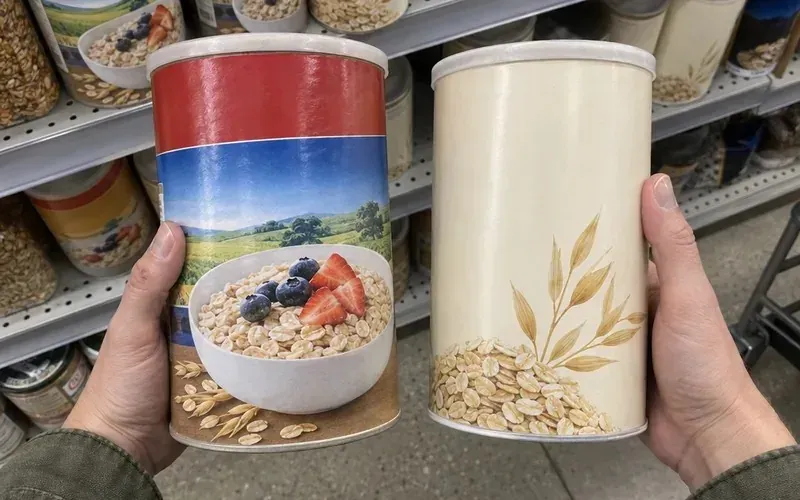
So where do you find them? Chowhound explains that the more expensive brands tend to sit at eye level, so you might have to look up high or crouch down low to find store brands and generics.
Simple, single-ingredient staples are the easiest swaps to start with:
- Flour, sugar and salt
- Oatmeal and whole grain rice
- Canned tomatoes and beans
- Frozen vegetables
- Milk and butter
The catch is taste. A store-brand cereal or coffee you hate isn’t a saving if it sits in the cupboard, so test one product at a time.
Look high and low on every shelf before you grab what’s right in front of you.
| 🎯Best For | Anyone who buys the same pantry staples every week. Skip it for a product someone at home can genuinely taste the difference in, and keep that one name brand. |
|---|---|
| 💰Cost | Free |
| 💵Payoff | $1.62 on a single oatmeal at Martin's store, with identical ingredients |
| ⏰Time | Same day |
| 👉First Step | On your next trip, pick 3 staples you always buy and check the top and bottom shelves for the store version |
2. Clip the Digital Coupons Before You Leave Home
Open your store’s app and clip coupons for the items already on your list. Many advertised prices only apply after you clip the coupon to your account.
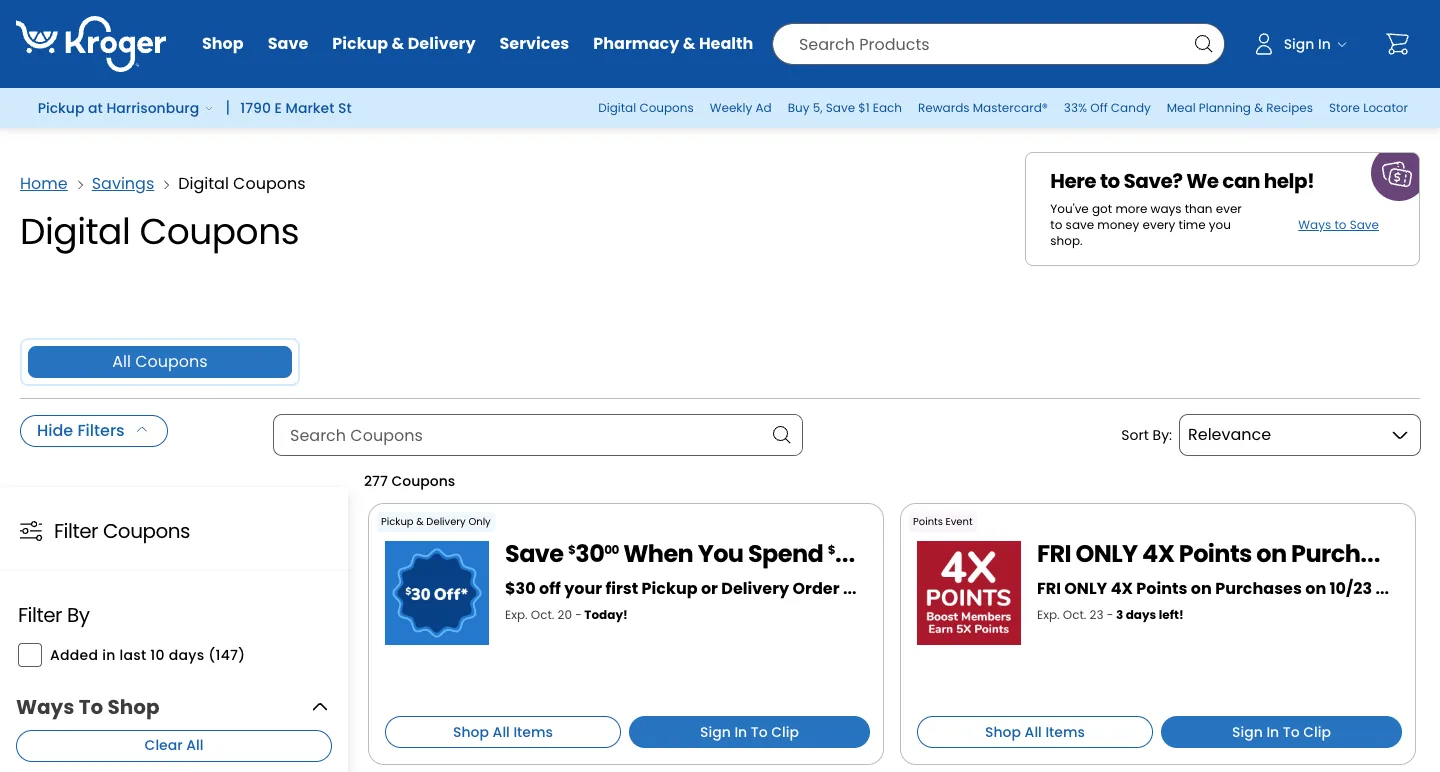
Kroger’s Digital Coupons page, for example, listed 277 offers when we checked in October 2026.
Here’s how to make it a habit:
- Write your shopping list first, so the coupons follow your plan instead of steering it.
- Open the app and search each item on the list, starting with meat, dairy and anything pricey.
- Clip only the ones for items you were already going to buy.
- Check the receipt before you leave, and ask the service desk about any coupon that didn’t come off.
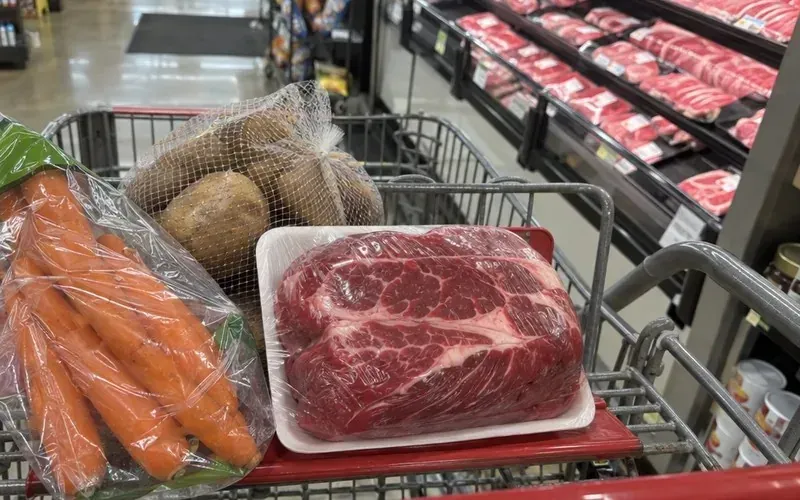
Here’s the math from Martin’s store: a boneless chuck roast cost $5.99 a pound with the app’s digital coupon and $8.99 without it. On a 3-pound roast, that’s $17.97 versus $26.97.
Shop at Walmart? Its app’s Walmart Cash offers work the same way, and our guide to Walmart cash back shows how to claim them. Once you’re comfortable, you can stack a coupon on a sale price or add one of the grocery savings apps that pay cash back on the same trip.
| 🎯Best For | Anyone who shops at a chain like Kroger with an app and a rewards program. Skip it if your store doesn't offer digital deals. |
|---|---|
| 💰Cost | Free |
| 💵Payoff | $3 a pound on a boneless chuck roast at Martin's store, or $9 on a 3-pound roast |
| ⏰Time | Same day |
| 👉First Step | Download your grocery store's app tonight and sign in to your loyalty account |
3. Give Every Grocery Week a Hard Number
Decide what you’ll spend before you walk in, and build the week around that number. Groceries are one of the few big household expenses you can change every week.
Say your last 4 trips averaged $160 (a made-up example). Set next week’s number at $150 and keep a running total on your phone’s calculator as you shop.
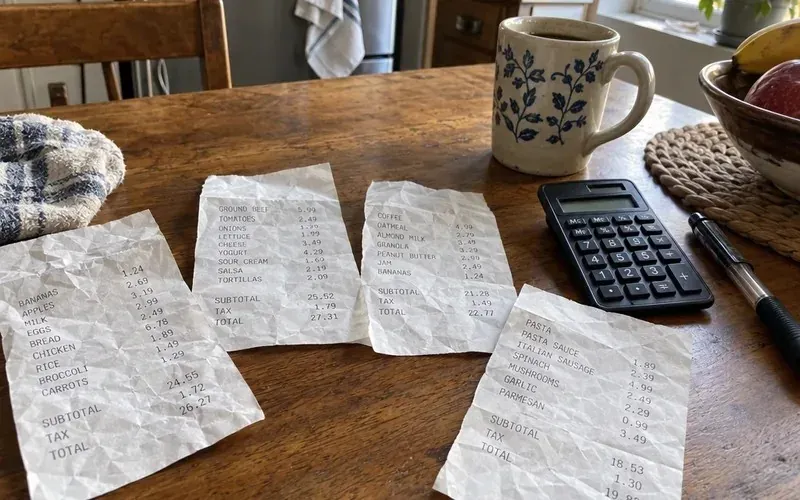
When the total gets close, you decide what goes back at the shelf, not at the register.
What about impulse purchases? Give them a small line in the budget, like $5, so one treat doesn’t feel like failure.
When the $5 is gone, the junk food waits until next week. And eat before you go, so hunger isn’t writing your shopping list.
| 🎯Best For | Anyone whose grocery spending swings a lot from week to week. Skip it if you already track every grocery dollar. |
|---|---|
| 💰Cost | Free |
| 💵Payoff | Sydney Martin feeds a family of 5 on $125 a week |
| ⏰Time | This week |
| 👉First Step | Add up your last 4 grocery receipts and divide by 4 to find your real weekly average |
4. Plan Dinners Around the Sales Flyer
Check this week’s sales flyer first, then pick meals that use what’s on sale. Dinner is where most of the week’s cooking happens, so it’s where a plan saves the most.
Martin explains that stores use loss leaders, deeply discounted items designed to lure you in. Your job is to buy those and walk past everything else.
She builds the whole grocery budget around dinners, knowing the leftovers will cover lunches.
Here’s a quick checklist for your menu:
- Pick the week’s meals from the flyer’s meat and produce deals first.
- Plan 1 slow cooker or sheet-pan meal for your busiest night, so a restaurant or fast food doesn’t win.
- Cook a double batch of spaghetti sauce, chili or burrito filling, and freeze half.
- Leave 1 night for leftovers, and pack the rest as lunch.
Need ideas that fit a tight budget? This list of cheap frugal meals gives you a starting menu.
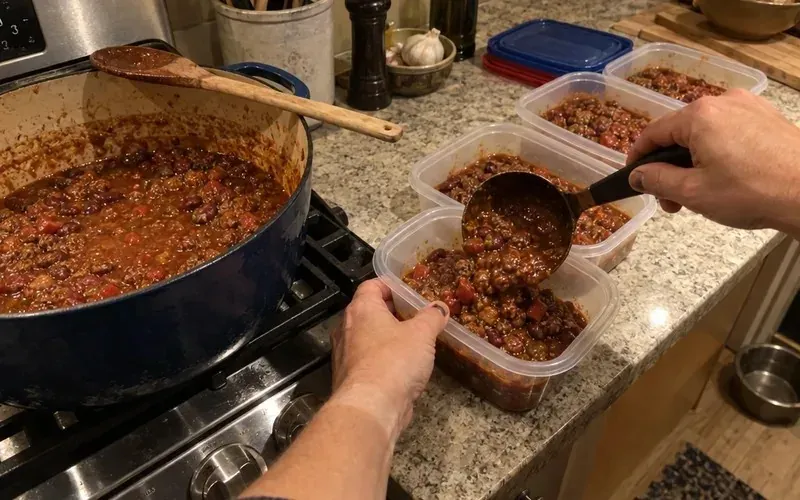
The flyer decides the menu, and the menu decides the shopping list.
| 🎯Best For | Households that cook dinner at home most nights. Skip it if your store doesn't publish a weekly ad. |
|---|---|
| 💰Cost | Free |
| 💵Payoff | Martin plans 6 dinners a week for about $100 |
| ⏰Time | This week |
| 👉First Step | Open your store's weekly flyer online or in the newspaper and circle 3 sale proteins or vegetables |
5. Keep a Price List So Fake Sales Can’t Fool You
Write down what you normally pay for the items you buy most. That list tells you whether a sale is real.
Food prices move from week to week, so the list becomes your yardstick. Here’s how to build it without turning it into a second job:
- After each trip, copy the price of your 10 most-bought items from the receipt into one note on your phone.
- Write the lowest price you see over the next 3 or 4 trips next to each item, with the store’s name.
- Before you buy anything marked as a sale, open the note and compare it with your lowest price.
The key is the unit price, the cost per ounce, pound or count. Many U.S. stores print it on the shelf tag, though no federal rule requires it, according to the National Institute of Standards and Technology.
Compare unit prices, not package prices. A bigger box isn’t always cheaper per ounce, and a “2 for $5” deal is only a deal if you’d have bought both.
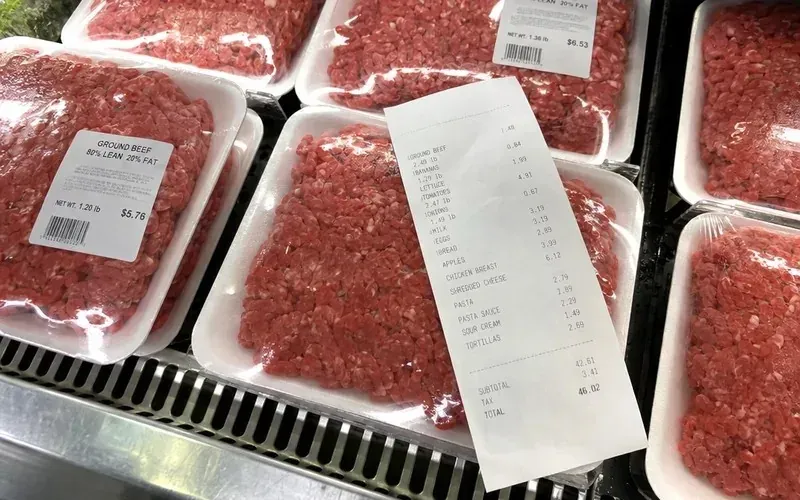
A price list also catches shrinkflation on your usual staples, when a package gets smaller but its price doesn’t.
Once your list covers 2 or 3 stores, you can see which one is cheapest for each staple. For things you buy online, price comparison sites do the same job across retailers.
A sale is only a sale if it beats the price you already know.
| 🎯Best For | Anyone who shops sales or buys meat regularly. Skip it if you shop at one discount store and rarely compare. |
|---|---|
| 💰Cost | Free, with a notes app or a paper list |
| 💵Payoff | $2 a pound on ground beef, the gap between a $5.99 "deal" and the $3.99 Martin's store routinely offers |
| ⏰Time | 2 to 4 weeks, since it takes a few trips to learn your prices |
| 👉First Step | Photograph your next receipt and type the prices of your top 10 items into your phone's notes |
7 Frugal Habits That Stop Food and Money Going to Waste
These 7 frugal shopping habits cut waste, impulse buys and convenience markups on every grocery trip:
- Shop your kitchen first
- Pick frozen and in-season produce
- Skip pre-cut food
- Freeze markdowns
- Buy only bulk you’ll finish
- Cook meatless dinners
- Use pickup
Pick the 2 that fit your week and add the rest over time.
Shop Your Fridge, Freezer and Pantry First
Check what you already have before you write the list. That stops you from buying a third jar of the same sauce.
It also shows you what needs using up, like milk or bread close to its expiration date, so you can plan meals around it.
Make it a 5-minute routine the night before you shop. Open the fridge, then the freezer, then the pantry, and write down anything that needs eating this week before you add a single new item.
Choose Frozen, Canned and In-Season Produce
Frozen vegetables and fruit keep for months, so you cook only what you need and nothing rots in the drawer.
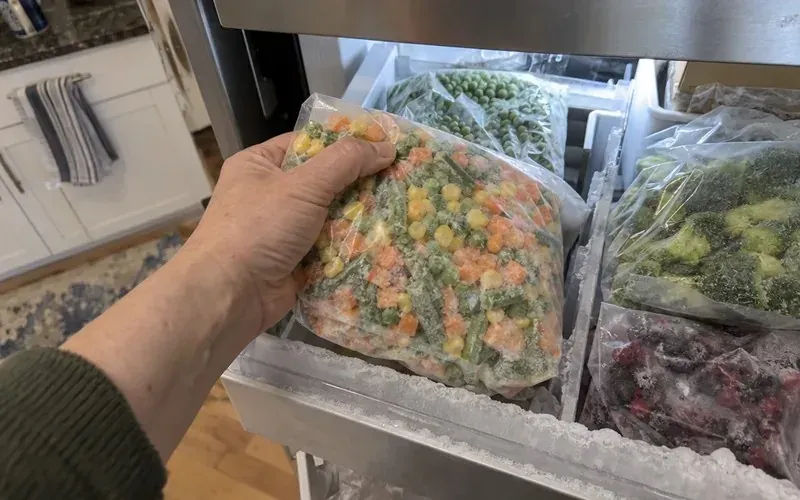
Canned beans and tomatoes work the same way in soups, casseroles and sauces. When you do buy fresh, pick what’s in season, such as apples and citrus in winter instead of berries.
Skip Pre-Cut, Pre-Grated and Pre-Washed Food
Convenience foods charge you for someone else’s knife work and extra packaging. A block of cheese, a whole onion and a head of lettuce cost less per pound than the shredded, diced or bagged versions.
The same goes for a ready-made entrée and for drinks. Sodas, juice and bottled iced tea add up fast, while tap water and home-brewed tea cost pennies.
Shop the Markdown Section, Then Freeze It
Check the markdown section for chicken, bakery bread and fresh fruit near the sell-by date. The rule is simple: eat it that night or freeze it the same day.
A discount you throw away costs you the full price. Treat markdowns like the flyer, and buy only what fits a meal you already cook.
Buy in Bulk Only What You’ll Finish
Bulk is only cheaper when nothing spoils. Before you buy the big size, check its unit price against the small one.
Then stick to staples with a long shelf life, like rice, oats, dried beans, flour for baking and paper goods, whether you shop a warehouse club or a regular store. Keep a list of household items worth stocking up on when they go on sale.
Meat works too if you freeze it. Martin buys larger packs when prices are low, then portions and freezes them at home.
Cook a Few Meatless Dinners Each Week
Meat is usually the priciest thing in the cart. Swap it out for vegetarian meals 2 or 3 nights a week, built on beans, lentils or eggs.
Dried beans and lentils are some of the cheapest protein you can buy.
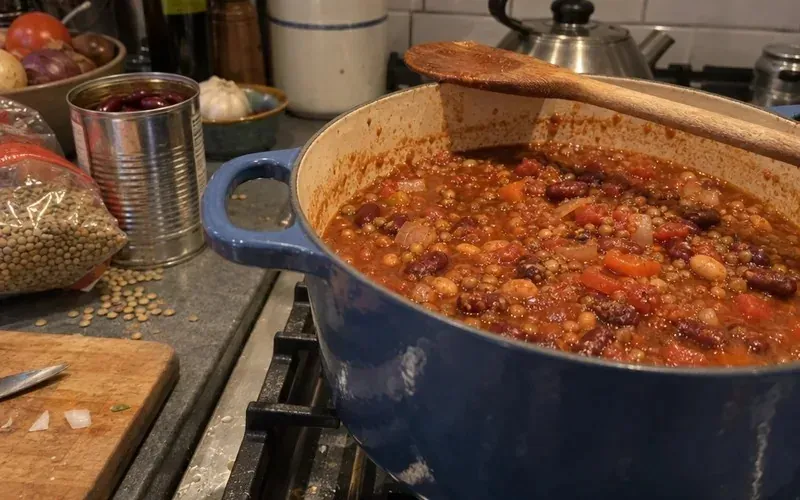
You don’t have to go fully meatless, either. Use half the usual meat in chili or tacos and make up the rest with beans or lentils, so the pot still feeds everyone.
Use Grocery Pickup When the Aisles Tempt You
Grocery pickup is a good fit if shopping with kids ends in extra snacks and crackers. You see a running total before you pay, and there’s no candy at the checkout.
Martin says pickup or delivery completely eliminates impulse buys for her. Just check your store’s pickup fee first, since it can eat into the savings.
Where Should a Total Beginner Start?
A total beginner should start with the 2 tips that work on the very next trip: buy the store brand and clip the app’s digital coupons. Neither needs a plan, a spreadsheet or a new store.
Then add one habit a week, in this order:
- Week 1: Shop your fridge, freezer and pantry, then buy store brands and clip coupons.
- Week 2: Add up your last 4 receipts and set a hard weekly number.
- Week 3: Plan your dinners from the sales flyer and leave 1 leftovers night.
- Week 4: Start your price list with your 10 most-bought items.
Is $100 a Week Too Much for Groceries?
Whether $100 a week is too much for groceries depends on how many people you feed. Sydney Martin feeds a family of 5 on $125 a week, about $25 per person.
That budget covers about $100 for 6 dinners and $25 for breakfast foods, snacks and pantry restocks.
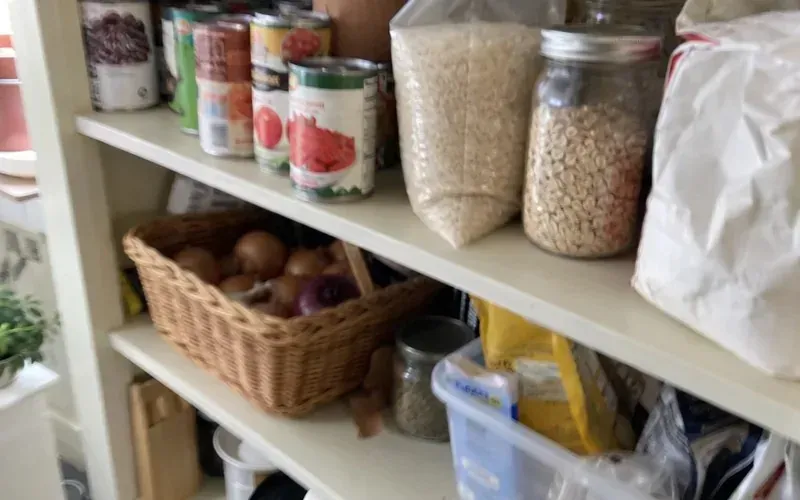
So compare per person, not per household. Divide your weekly spend by the number of people you feed and see how it stacks up against that $25.
If your number is higher, start with tips #1 and #2, then set a hard number with tip #3. If your budget is tight, these ideas for stretching $100 for 2 weeks and eating on $3 a day go further.
Key Takeaways
- Store brands save money on your next trip. Martin's store-brand oatmeal cost $1.62 less with the exact same ingredients.
- Clip coupons before you shop. One missed digital coupon meant $9 more for a 3-pound roast.
- Set a weekly number. Martin feeds a family of 5 on $125 a week, about $25 per person.
- Let the flyer pick dinner. Loss leaders get you in the door, so buy those and skip the rest.
- Know your usual prices. A $5.99 "sale" on ground beef isn't a deal when the store often charges $3.99.
Frequently Asked Questions
How do you cut a grocery bill in half?
No single tip here cuts a grocery bill in half, and the biggest per-item cut is the store-brand swap, which Sydney Martin says can save up to 40% on some products. Bigger drops come from stacking tips: store brands, clipped coupons, a fixed weekly number and dinners planned around sale items.
Add up your last 4 receipts first, so you can measure the change instead of guessing.
How do you make a budget-friendly shopping list?
A budget-friendly shopping list starts from your fridge, freezer and pantry, then adds only the ingredients your planned dinners need, built around this week’s sale items. Write the usual price beside each staple so you can tell a real deal from a fake one.
Order the list by store aisle, so you walk past fewer things you didn’t plan to buy.
What is the best way to save money on shopping?
The best first move is buying store brands, because it saves money on your very next trip at any grocery store and needs no app or planning. At Sydney Martin’s store, the name-brand oatmeal cost $1.62 more than an identical store brand.
How can one person save money on groceries?
One person saves the most by buying only what they’ll eat before it spoils: freeze single portions, buy in bulk only shelf-stable staples and use frozen vegetables so nothing rots in the drawer. Cooking one big batch and eating it over several lunches also beats buying deli sandwiches.
The Bottom Line
The same food costs less once you know which price is the real one. This week, grab 3 staples from the top or bottom shelf and clip your store app’s coupons before your next trip.

Jason is a personal finance expert and the founder of Frugal For Less. He has spent over a decade researching and testing hundreds of money making apps, survey sites, and savings strategies to help readers earn more and keep more of their hard-earned cash.
More about the author