10 Ways to Decorate an Apartment on a Budget, Most of Them Free

You can learn how to decorate an apartment on a budget even when rent takes most of your paycheck and your lease says no nails.

Disclosure: This post may contain affiliate links. As an Amazon Associate, we earn from qualifying purchases. This comes at no extra cost to you. Read our full disclosure, or see how we review platforms.
You can learn how to decorate an apartment on a budget even when rent takes most of your paycheck and your lease says no nails.
Most of the 10 ideas below cost nothing at all.
None of them needs paint, a drill or a new couch. Every one is safe for a lease, so your deposit stays safe too.
I sorted the list from the free changes you can make tonight to the ones that take a little planning, like getting free furniture.
Pick your starting point by what you need most:
- Got one free evening and no money? #1 and #2 change a room in an hour.
- Want the room to feel warmer at night? #3 and #9 use lamps and blankets you already have.
- Need a dresser, shelf or chair? #5 and #6 cover free furniture near you.
- Tired of bare walls? #7 and #10 fill them without a single nail.
10 Free Ways to Decorate Your Apartment
These 10 DIY ideas focus on a warm, cozy look built from plants, shelves, frames, pillows and soft lighting.
Here’s how they compare at a glance:
The 10 ideas at a glance
| # | Idea | Cost | Time |
|---|---|---|---|
| 1 | Shop your own home | Free | 1 hour |
| 2 | Rearrange your furniture | Free | 1 to 2 hours |
| 3 | Soft, warm lighting | Free to cheap | 30 minutes |
| 4 | Plants from cuttings | Free | 3 to 6 weeks |
| 5 | Buy Nothing groups | Free | A few days |
| 6 | Facebook Marketplace | Free | A few days |
| 7 | Free art prints | Free to cheap | 1 evening |
| 8 | Branches and flowers | Free | 20 minutes |
| 9 | Pillows and blankets | Free | 20 minutes |
| 10 | Shelves and walls, no holes | Free | 1 afternoon |
The first 4 cost nothing and need no help from anyone, so they’re the easiest place to begin.
1. Shop Your Own Home First
The cheapest decor is the decor already sitting in your closets, drawers and other rooms.
Before you look for anything new, walk through your apartment with a laundry basket.
Pick up anything that could look nice somewhere else: frames, books, baskets, vases, candles, a ceramic bowl or a small lamp. Check the back of the closet and under the bed too, since that’s where gifts and old decor tend to hide.
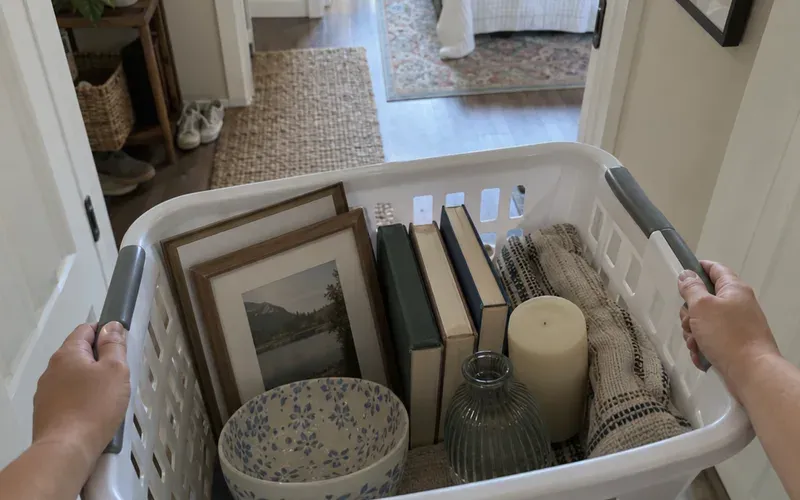
Then set it all on the floor of the room you want to fix first.
Here’s the deal:
A vase that sat on a kitchen shelf for a year looks new on a bedroom dresser. Your eyes stopped seeing it in the old spot, but they notice it in a new one.
Group what you found in small sets on each surface. Many decorators use the 3-5-7 rule, which means 3 things on a small table, 5 on a dresser and 7 on a bookcase.
Odd numbers tend to look relaxed, while pairs can look stiff.
Mix the height of the items in each group. On a coffee table, a tall vase, a short stack of books and a small candle look better than three things of the same size.
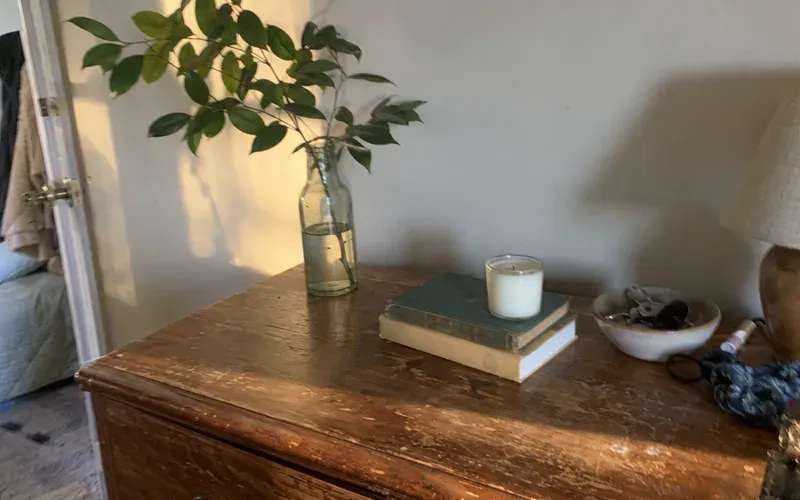
The bathroom counts too, since a small plant or towels in your colors make it feel finished.
Anything you pulled out that doesn’t fit anywhere can go. If it’s in good shape, you can sell what you don’t use and put that cash toward the one or two things you really need.
In other words, start by moving your own things around before you look for anything new.
2. Rearrange Your Furniture
Rearranging the furniture you own is the biggest free change you can make to a room.
It costs nothing, and you can undo it in an hour if you don’t like it.
Start by picking one focal point for each room. In a living room that’s usually a window, the TV or the longest wall.
Point your couch and main chair toward that spot.
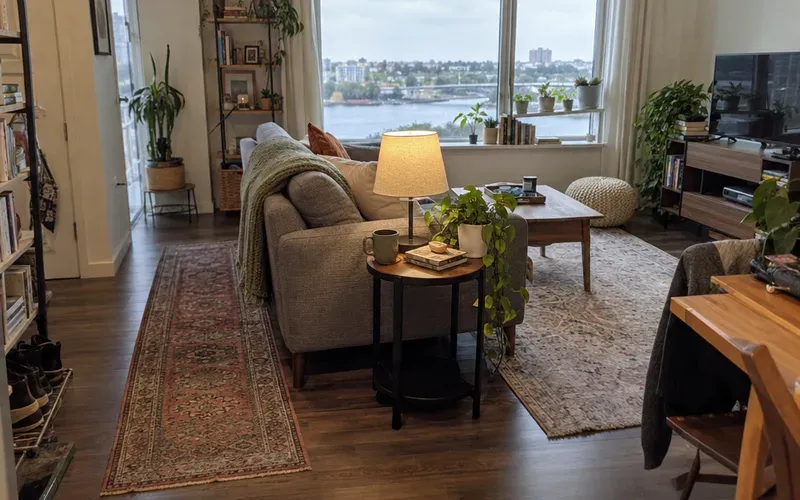
Next, pull the couch a few inches away from the wall if you have room. It sounds strange, but a couch that “floats” a little often makes a small living room feel more planned.
Keep a clear walking path through the room. Nobody should have to squeeze past a chair to reach the door.
In a studio apartment, use furniture to split the space into zones.
The back of a couch or a bookcase can separate your bed from your living area. A rug you already own can mark out a “living room” inside one big room.
Try the bedroom too. Moving the bed to face the door or the window can make the room feel bigger, and it’s still free.
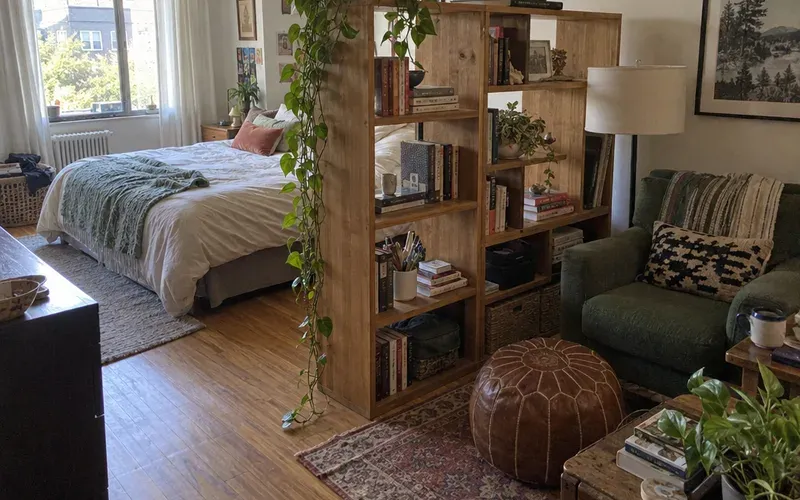
Measure the dimensions of big pieces first, so you know the couch fits on the new wall. Pieces with a small footprint, like a stool or side table, are the easiest to try in new spots.
Take a phone photo before you move anything. If the new layout feels wrong after two days, you can put it back the way it was.
A new layout gives you a new-looking room, and it costs nothing but an hour of work.
3. Switch to Soft, Warm Lighting
Lamps with warm bulbs make a room feel cozy, while one bright ceiling light makes it feel like an office.
That’s why lighting is one of the fastest ways to change a rental.
Many apartments come with a single harsh fixture in the middle of the ceiling.
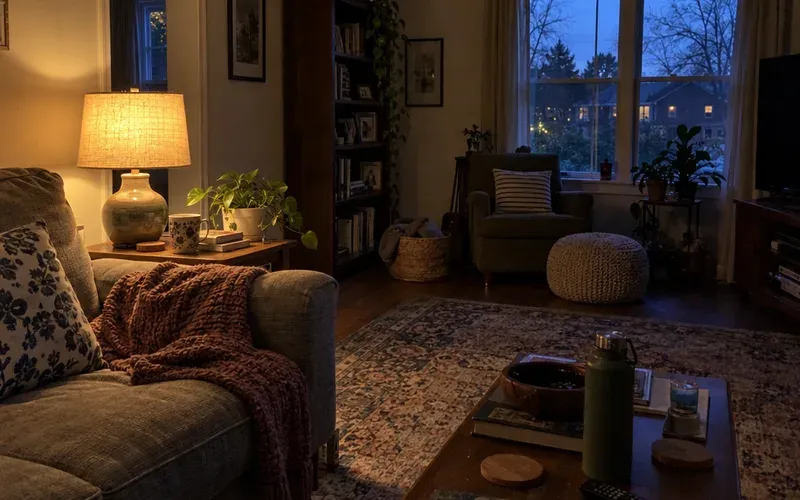
Turn it off at night and light the room from lower spots instead. Use a table lamp beside the couch, a floor lamp in a dark corner and a small lamp on a shelf.
Most homes already have a lamp or two in a bedroom or closet. Move them into the room where you spend your evenings.
Look at the bulbs you already own, too.
Bulb boxes say whether the light is warm white, soft white or daylight. Warm white and soft white give a golden glow, while daylight bulbs look cool and blue.
If you have warm bulbs in a hallway or bathroom, swap them into your living room lamps.
String lights you already own for the holidays can wrap around a bookcase or sit in a glass jar. They give off a soft glow that makes shelves and plants stand out at night.
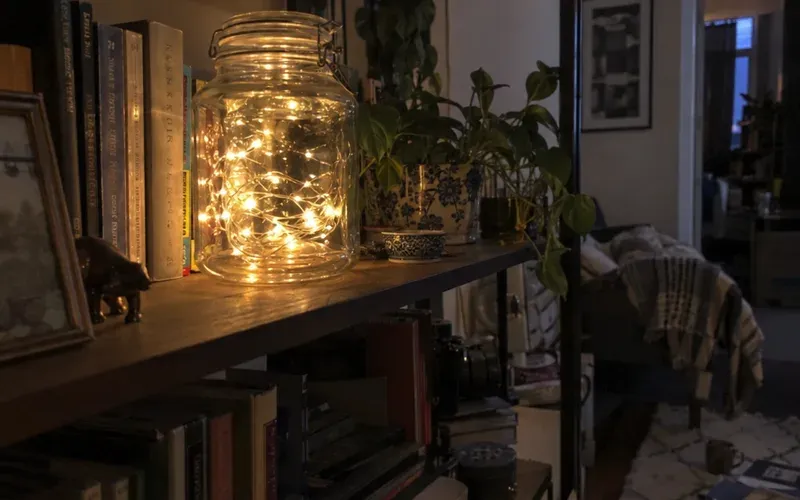
The best part?
A lampshade changes a lamp’s whole look. Thrift stores often sell lampshades for very little, and an old lamp base with a fresh shade can look like a new lamp.
When you’re done for the night, unplugging lamps and string lights you don’t use can cut phantom energy on your power bill.
For a cozy room, use three lamps at eye level or lower instead of one light on the ceiling.
4. Grow New Plants From Cuttings
You can grow a whole shelf of houseplants for free by rooting cuttings from plants you or a friend already have.
Plants make a rental feel alive, and cuttings let you get them without buying a single pot from a store.
Pothos and philodendron are the easiest plants to start with.
According to Iowa State University Extension’s guide to stem cuttings, a good cutting is 3 to 6 inches long with at least two nodes. A node is the small bump on the stem where a leaf grows.
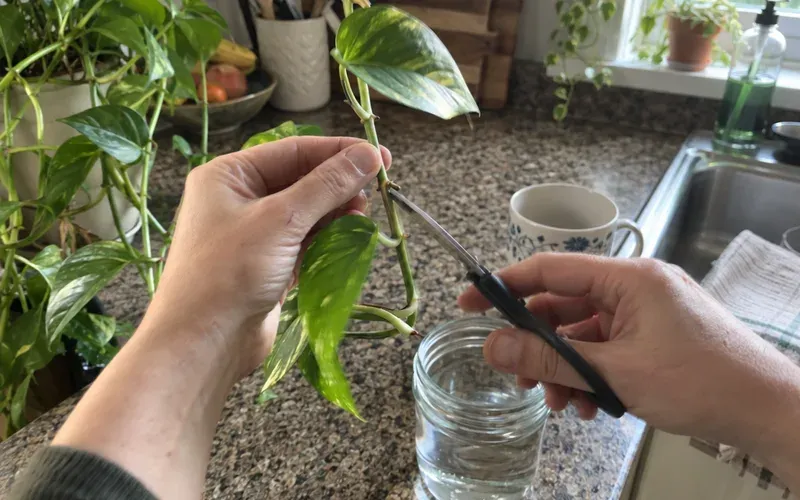
Remove the lower leaves so only a few sit near the top. Then stand the cutting in a glass jar of water, with the nodes under the water and the leaves above it.
The same guide says cuttings need 4 to 6 hours of bright, indirect light to grow roots and shoots.
A spot near a window, out of hot direct sun, works well. Change the water about once a week so it stays clean.
Be patient here. Most houseplant stem cuttings form roots in 3 to 6 weeks, per the extension guide.
Once the roots are about an inch long, you can move the cutting into a pot of soil.
Not ready to pot them yet?
A row of jars with rooting cuttings on a windowsill is decor on its own.
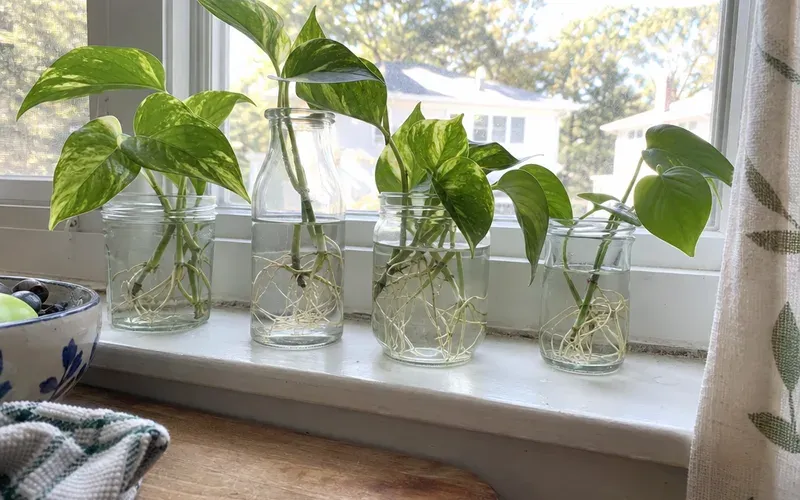
Don’t have a plant to cut from? Ask a friend, a coworker or your Buy Nothing group (see #5), since most plant owners are happy to trim off a few stems.
You can also regrow food from kitchen scraps, like green onions in a glass on the counter.
If your shelf fills up, extra rooted cuttings can even turn into a few dollars, since some people make money growing plants this way.
Plants from cuttings cost nothing but time, and they make a room look and feel warmer.
5. Ask for Free Furniture in a Buy Nothing Group
Buy Nothing groups let you get furniture, lamps and decor from neighbors for free.
They’re one of the best ways to fill an empty apartment when you have no budget at all.
The Buy Nothing Project is a gift network where people give away what they no longer need and ask for what they want.
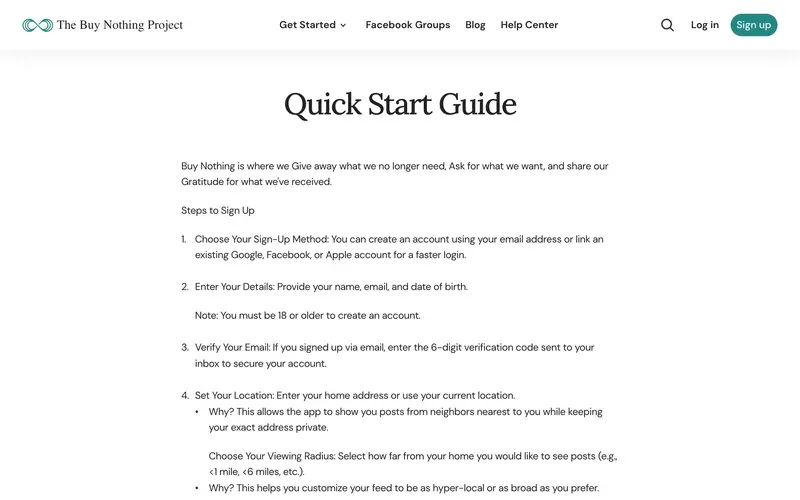
Its quick start guide says Standard membership is always free (as of November 2026). You can sign up with an email address or link a Google, Facebook or Apple account.
You must be 18 or older to create an account.
Groups are local, often set up by neighborhood, so the items you get are close by. You can join through the Buy Nothing app or find your local group on Facebook.
Here’s how to get the most out of it:
- Read your group’s rules before you post.
- Search past posts for words like dresser, bookcase, lamp, chair or mirror.
- Post an “ask” for the exact thing you need, with your pickup times.
- Thank the giver in the group after you pick it up.
Be clear in your ask, and say when you can pick up. A short, friendly post like this one usually gets more replies than “Need furniture”:
Ask: I just moved into my first apartment and I’m looking for a small bookcase or a side table. I can pick up any evening this week at [your cross streets]. Thank you, neighbors.
If nobody has one, post again in a week or two. New gifts show up all the time as people move and clean out.
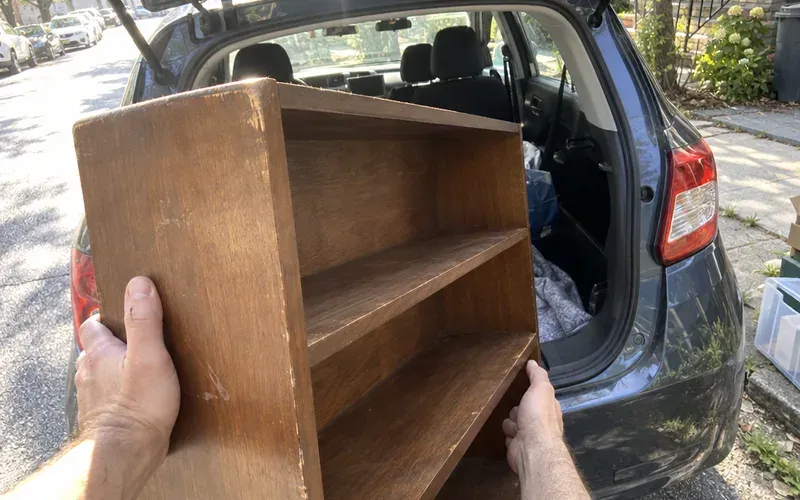
Members give away much more than furniture, and reusing things is good for sustainability. Picture frames, baskets, vases, throw pillows and plant cuttings are common gifts.
Give back when you can. The group works because people share what they no longer use, and a gift from you helps the next person.
If you only try one free furniture source, make it your local Buy Nothing group.
6. Find Free Furniture on Facebook Marketplace
Facebook Marketplace is full of free furniture from people who are moving and need it gone fast.
On Facebook Marketplace, many sellers list items for $0 just to avoid hauling them to the curb.
Search for the item you need along with the word “free,” such as “free dresser” or “free bookshelf.” Check often, because free pieces usually get claimed within hours.
The end of the month is a good time to look, since that’s when many leases end and people move out.
Stick to hard furniture when you can. Wood dressers, side tables, bookcases and chairs are easy to wipe down.
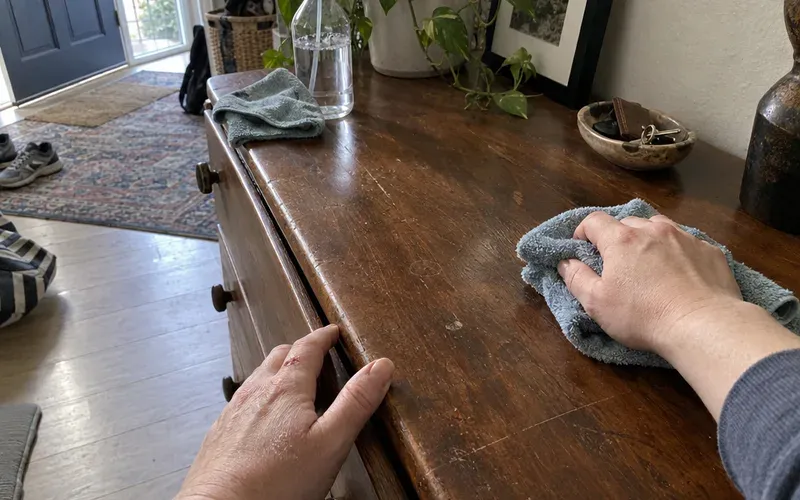
Be more careful with couches, mattresses and other soft pieces.
Look at the seams and corners closely before you take anything upholstered home. If something looks off, it’s fine to pass and wait for the next free listing.
Safety matters too. Meet in a public spot when you can, or bring a friend to a pickup at someone’s home.
Curbside finds work the same way.
Some people walk their neighborhood on trash night or right after move-out weekend, and garbage picking can turn up solid wood pieces. Check your city’s rules first, and only take what’s clearly set out for anyone to grab.
A free wood side table with a few scratches can look great with a plant and a lamp on top.
Free furniture is out there every week, but it goes to the people who check often and pick up fast.
7. Frame Free Art Prints
You can fill your walls with art for free by printing images from public collections and putting them in frames you already own.
Big museums and libraries share many old works online at no cost.
The Library of Congress Free to Use and Reuse sets hold more than 100 sets of rights-free images (as of November 2026). Each set has 25 to 50 historical photographs, posters, maps or movies, and there’s even a set of gardens.

Old travel posters and botanical pictures look great in a living room or kitchen.
Here’s how to turn a free image into wall art:
- Measure the frame you want to fill, inside the edges.
- Download the largest copy of the image the site offers.
- Print it at home, or at a library or office store if your printer can’t handle photo paper.
- Trim the print to size and slide it into the frame.
A small print fits a frame you already own, while a larger one can go in a frame from a thrift store. Plain white paper works too, since the glass hides most of the difference.
Frames you already have can get a new life. Swap out the old photo, and the frame turns into fresh wall art for free.
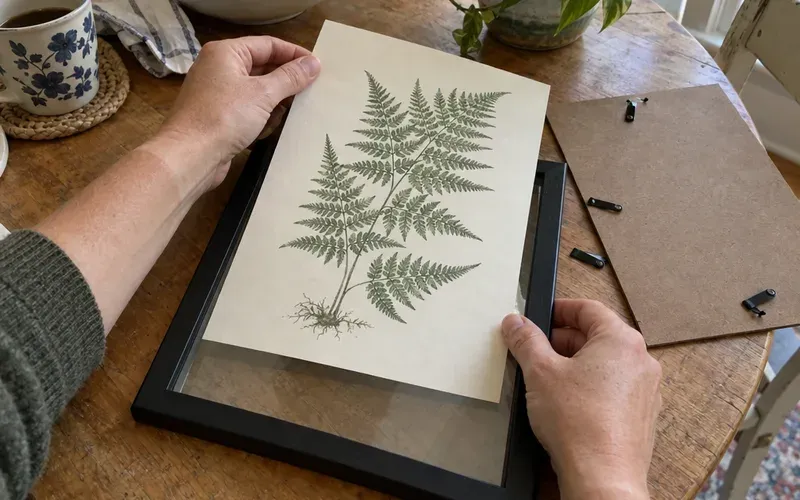
You can also frame other free things.
- A page from an old calendar
- A pretty map or postcard from a trip
- A child’s drawing
- A pressed leaf or flower (see #8)
Matching frames make mixed art look planned. If your frames don’t match, stick with one color for the mats or the art itself, like all black-and-white prints.
Free art in a frame you already own is the cheapest way to make a wall feel finished.
8. Bring In Branches and Flowers From Outside
A few branches or wildflowers in a jar can make a room look fresh for free.
Nature changes with the seasons, so this decor never looks the same for long.
Look for things that are clearly free to take. Fallen branches after a windy day, pinecones in your own yard or flowers from a friend’s garden are all good choices.
Always ask first if it’s someone else’s yard. Never cut plants in parks or other public places where picking isn’t allowed.
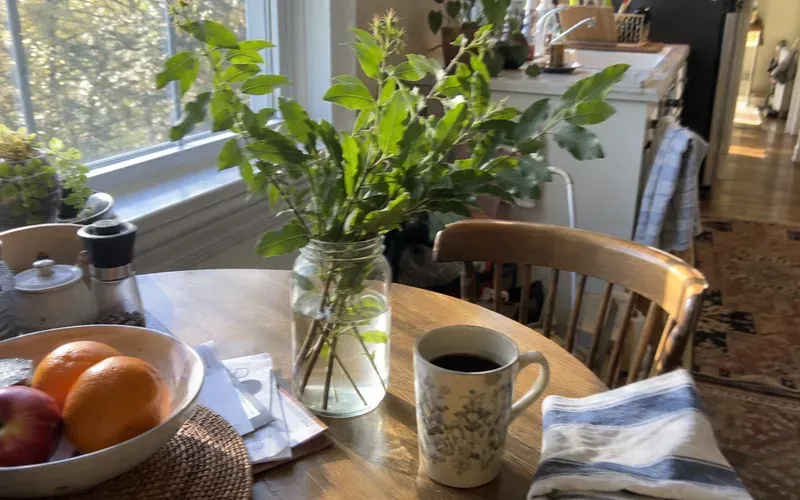
Each season brings something different:
- Spring: flowering branches or tulips from a friend’s garden
- Summer: leafy branches and wildflowers from your own yard
- Fall: colored leaves and dried grasses, often fallen after wind
- Winter: evergreen branches and pinecones
Dried grasses and pinecones need no water, so they’re a good pick if you don’t want to swap things often.
Use what you have for a vase.
A glass jar, an old bottle or a tall drinking glass works. Clean glass jars make simple vases, and there are lots more ways to upcycle jars and bottles around the house.
Old candle jars work too, and you can find more ideas to reuse candle jars once the wax is out.
Trim the stems at an angle and change the water every couple of days. Branches with leaves stay fresh longer when they’re out of direct sun.
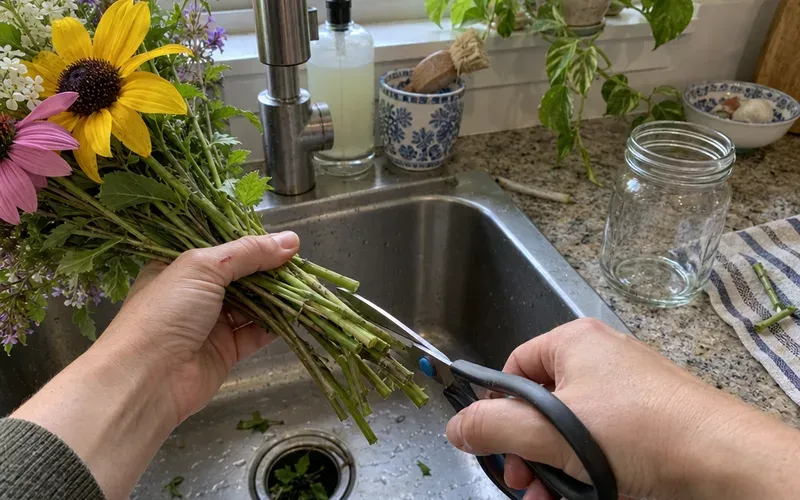
Outside decor is free, it changes with the seasons and it makes a rental feel lived in.
9. Layer the Pillows and Blankets You Own
Throw pillows and blankets add color and softness to a room, and you probably own more of them than you think.
Soft things are the quickest way to make a couch or bed look cozy.
Gather every throw pillow and blanket in your home in one place.
Then sort them by color. Pick one main color and one or two others that look good with it, and use only those in one room.
This is where the 70/30 rule helps. About 70% of the room stays in one main color or style, and the other 30% adds contrast through pillows, blankets and art.
Put two or three pillows on the couch in different sizes or textures. A smooth pillow, a knit one and a fuzzy one look richer than three of the same.
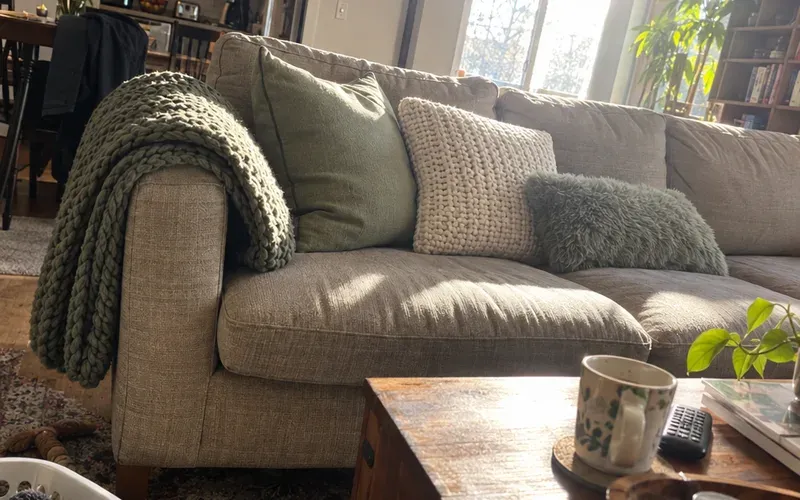
Fold a blanket over one arm of the couch or across the end of your bed. A throw left in a basket next to a chair also looks cozy and keeps it within reach.
Got a pillow cover you’re tired of?
Turn it inside out if the back is a plain color, or swap covers between the bedroom and living room. Old sweaters can even become new pillow covers with a few cuts and some stitches.
Wash everything before you style it. Clean pillows sit fuller and look newer.
Moving soft things around takes 20 minutes and can change the whole mood of a room.
10. Style Shelves and Walls Without Holes
You can decorate your walls and shelves without nails, paint or a drill, which keeps your lease and your deposit safe.
The trick is to lean, stack and stand things instead of hanging them.
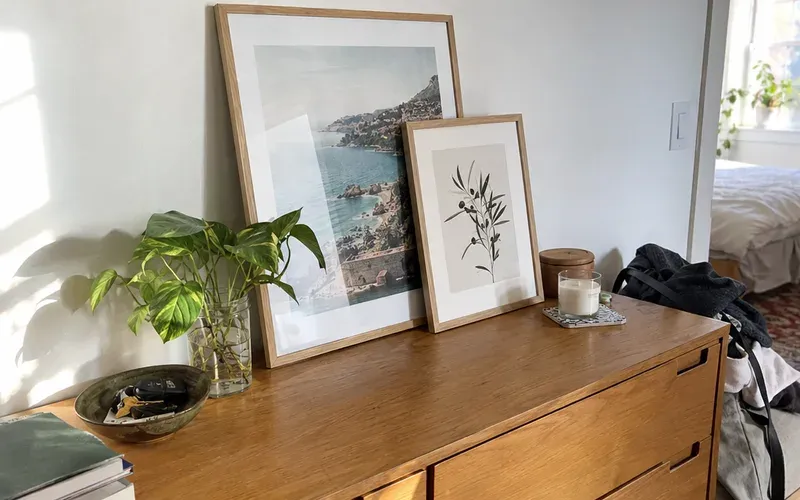
Lean big art or a mirror against the wall on top of a dresser or a low bookcase.
A large mirror leaned on the floor also works, and it bounces light around a small room. Put small frames in front of a big one so they overlap a little.
A freestanding bookcase from a Buy Nothing group (see #5) can do the job of wall shelves. Style it with the 3-5-7 rule from #1.
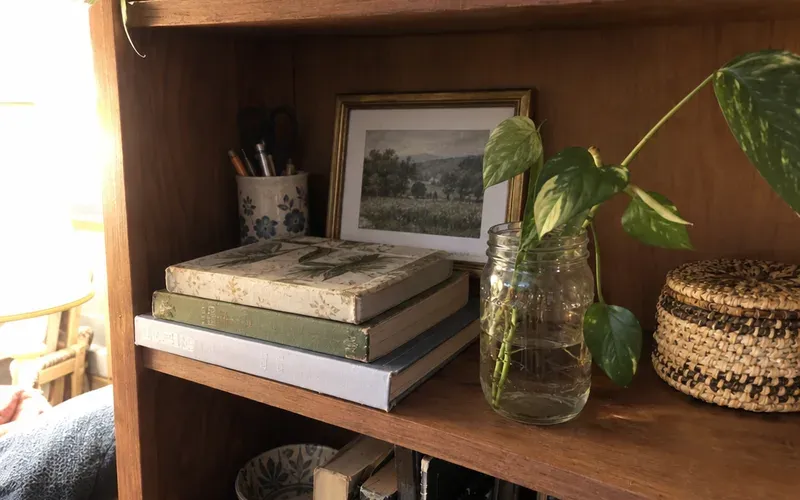
Here’s a simple way to fill one shelf:
- A small stack of books lying flat
- A plant or cutting in a jar
- A framed print leaned at the back
- One small basket for clutter
Leave some empty space on each shelf. A shelf with a little room looks calm, while a packed one looks messy.
What about removable hooks and strips?
They can work, but check your lease first. Follow the package’s weight limit and removal steps closely, because some adhesives can pull off paint.
A tension rod is another wall-free tool. It fits inside a window frame or closet and holds up a curtain without any screws.
If it stands on its own or leans, it can’t damage your walls.
The Best Order to Decorate a New Apartment
The best order is to clean and arrange first, then fix the light, then add soft things and art, and look for free furniture last.
That order matters because each step shows you what the next one needs.
Here’s the order to follow:
- Clean every room and clear the clutter.
- Rearrange the furniture you own (#2).
- Move lamps and set up soft, warm light (#3).
- Style pillows, blankets and the decor you found at home (#1 and #9).
- Add plants, branches and framed art (#4, #7 and #8).
- Ask for free furniture to fill the gaps you still notice (#5 and #6).
Waiting on furniture until the end saves you from taking a free dresser you don’t have room for. Once the room is arranged and lit, you’ll know exactly what’s missing.
Do the free work in the room first, then go looking for the pieces it still needs.
How to Make a Cheap Apartment Look Nice
A cheap apartment looks nice when it’s clean, clutter-free and lit by lamps instead of one ceiling light.
None of that costs money.
Clean first. Wipe the windows, light switches, baseboards and cabinet fronts, since dust and smudges make any room look tired.
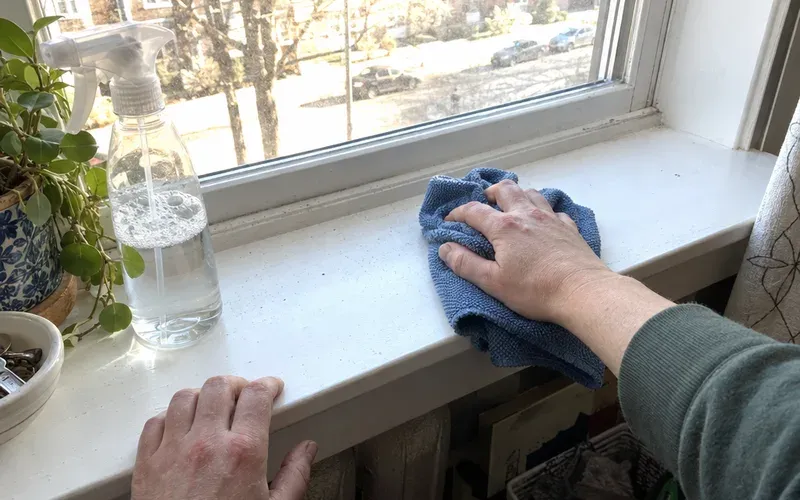
Then clear the flat surfaces.
Keep only a few things on each table or counter, grouped with the 3-5-7 rule. Put everything else in a drawer, basket or closet.
Hide the things that make a rental look like a rental. A basket by the door for shoes keeps the entry clear.
A messy cord bundle can go behind furniture or in a basket. A bare corner can take a plant from #4 or a floor lamp from #3.
A mirror across from a window bounces daylight around the space, and rugs cover worn rental floors.
Finally, repeat your colors. When the same two or three colors show up in the pillows and art, mismatched furniture starts to look planned.
A clean, calm room with warm light looks more expensive than a cluttered one full of new things.
How to Make Your Apartment Feel Cozy on a Budget
An apartment feels cozy when it has warm light, soft textures and a few personal things.
You can get all three for free with ideas from this list.
Start with light. Turn off the ceiling light at night and use lamps with warm bulbs, as #3 explains.
Next, add softness. Textiles like throw pillows, blankets, linen curtains and rugs you already own make a room feel warmer to look at and to sit in.
Then add life and personality.
Plants from cuttings, fresh branches and framed photos of people you love make the space yours. A rental with your own things in it feels much less like a rental.
Scent and sound count too. A candle you already own and some soft music can make a small room feel like a home at night.
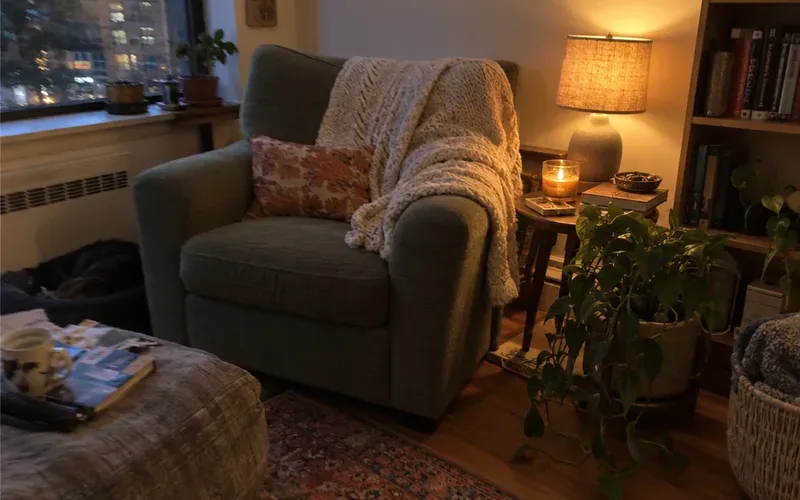
Cozy comes from light, softness and personal touches, not from how much you spend.
How Much Should You Budget to Decorate an Apartment?
You can decorate an apartment for $0 if you follow the free ideas on this list first and spend only on true gaps.
That’s a big difference from what many households spend.
According to Statista’s data on household furnishings spending, the average US consumer unit spent about $2,414 on household furnishings and equipment in 2024. That covers furniture, appliances and other things for the home, not just decor.
You don’t have to spend anywhere near that.
Set a small budget you’re comfortable with, then decorate one room at a time. Finish the room you use most, usually the living room or bedroom, before you move to the next.
Treat every expense as the last step, and spend only on things you can’t get free, like a lampshade or a few warm bulbs. Everything else on this list costs nothing.
If rent takes most of your paycheck, it may help to look at ways to save money on rent before you spend anything on decor.
Free first, one room at a time, is the cheapest way to make an apartment feel finished.
Renter Rules to Check Before You Decorate
Your lease decides what you can and can’t change, so read it before you start any project.
Most leases say you must return the apartment the way you found it, apart from normal wear.
Look for rules about nails, adhesive hooks, wall decals and window coverings. Some buildings also limit what you can leave in hallways or on balconies.
When in doubt, ask your landlord or property manager in writing.
Every idea on this list skips paint, drilling and big changes. That way you never risk your security deposit, and everything moves with you to your next place.
Take photos of each room on move-in day. If a question ever comes up about damage, you’ll have proof of how the place looked.
If you’re still saving up for a place, it can also help to learn how to rent an apartment with no money down.
What to Skip When Money Is Tight
When money is tight, skip matching furniture sets, wall paint, wall shelves and soft curb finds, since each costs more than it adds.
Skip buying matching sets of furniture or decor. Mixed pieces with repeated colors look more personal and cost far less.
Skip big, permanent changes like painting walls or putting up wall shelves. They can cost you part of your deposit if your lease doesn’t allow them.
Skip soft furniture from the curb unless you can check it closely. Hard pieces like wood tables and bookcases are safer free finds.
Skip filling every wall and corner right away. Live in the space for a few weeks, then add things where you really feel something is missing.
If you like DIY projects, there are plenty more things you can do yourself to save money around the house.
Key Takeaways
- Start with what you own. Moving furniture, lamps and decor between rooms is the biggest free change you can make.
- Light it low and warm. Lamps with warm white bulbs make a room cozier than one ceiling light.
- Grow your plants. Pothos and philodendron cuttings root in water in 3 to 6 weeks, per Iowa State University Extension.
- Get furniture free. Buy Nothing groups and free Facebook Marketplace listings can fill an empty apartment.
- Keep the walls clean. Lean art and mirrors instead of hanging them, and check your lease before using any adhesive.
Frequently Asked Questions
How can I decorate my apartment for free?
Start by moving the furniture, lamps, pillows and frames you already own into new spots, then add plants grown from cuttings and art printed from free public collections. Free furniture from a Buy Nothing group can fill the bigger gaps.
What is the 3-5-7 rule in decorating?
The 3-5-7 rule is a styling habit of grouping decor in odd numbers, such as 3 things on a nightstand, 5 on a dresser and 7 on a bookcase. Odd groups tend to look less stiff than matching pairs.
What is the 70/30 rule in decorating?
The 70/30 rule means about 70% of a room follows one main style or color, and the other 30% adds contrast. In a rental, the walls and big furniture are usually your 70%, and pillows, plants and art make up the 30%.
How much does apartment decor cost?
Apartment decor can cost nothing if you work with what you own and free finds. Statista puts average US spending on household furnishings and equipment at about $2,414 a year in 2024, so free ideas let you keep most of that money.
How do you decorate a rental without damaging the walls?
Lean art and mirrors on shelves, dressers or the floor, and use freestanding furniture for storage. If you use removable hooks, follow the package’s weight limit and removal steps, and check your lease first.
How do I make my apartment feel cozy on a budget?
Turn off the ceiling light at night and use lamps with warm bulbs instead. Then add soft things you already own, like throw pillows and blankets, plus a few plants.
The Bottom Line
You don’t need new furniture or a big budget to make a rental feel like home.
This weekend, pick one room, rearrange it, move one lamp in from another room and start 3 plant cuttings in a jar of water.

Jason is a personal finance expert and the founder of Frugal For Less. He has spent over a decade researching and testing hundreds of money making apps, survey sites, and savings strategies to help readers earn more and keep more of their hard-earned cash.
More about the author